- Sinamangal Kathmandu
Nepal -
Sun - Friday 8.00 - 18.00.
Saturday CLOSED
Egg Freezing vs Embryo Freezing: Which Fertility-Preservation Option Fits Your Situation?
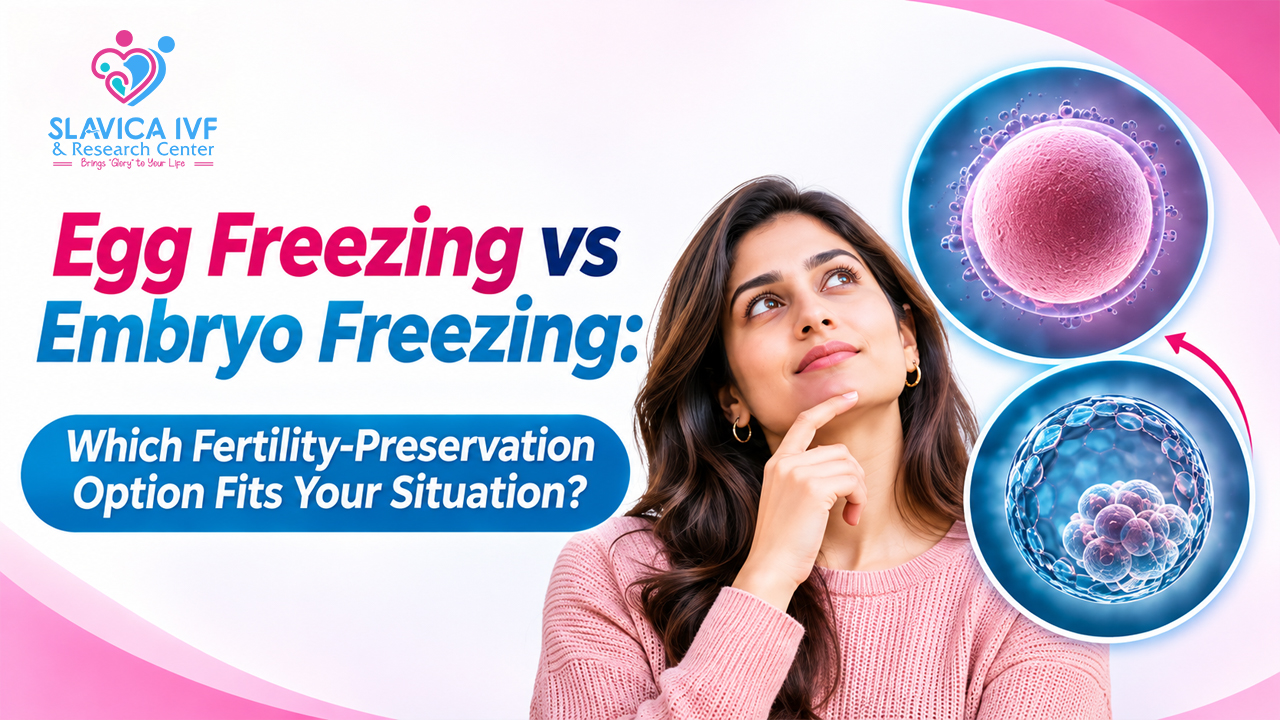
Egg Freezing vs Embryo Freezing: Which Fertility-Preservation Option Fits Your Situation?
Planning for a family does not always follow a fixed timeline. You may want to focus on your career, wait until you feel ready for parenthood, complete medical treatment, or preserve your reproductive options for the future. Whatever your circumstances, modern fertility-preservation techniques may provide additional choices.
Two commonly used methods are egg freezing and embryo freezing. Both involve preserving reproductive cells at very low temperatures, but they differ in when fertilization takes place, how the preserved material is used, and the decisions involved.
If you are comparing egg freezing vs embryo freezing, the most important questions are: Which option offers more flexibility? How successful are the procedures? What does each treatment cost? And which approach may be appropriate for your age, fertility health, and future plans?
Egg freezing preserves unfertilized eggs for possible future use, while embryo freezing preserves eggs that have already been fertilized with sperm. Neither procedure guarantees a pregnancy or live birth.
This guide explains the differences between egg freezing and embryo freezing, including their procedures, success rates, costs in Nepal, advantages, limitations, and important considerations. It also explains how a fertility consultation at Slavica IVF & Research Center in Kathmandu can help you explore your options.
Egg Freezing vs Embryo Freezing: Key Differences at a Glance
Both egg freezing and embryo freezing are forms of fertility preservation, but they preserve reproductive material at different stages.
Egg freezing, medically known as oocyte cryopreservation, stores mature eggs before fertilization. Embryo freezing, or embryo cryopreservation, stores embryos created after eggs have been fertilized through in vitro fertilization (IVF) or intracytoplasmic sperm injection (ICSI).
Here is a side-by-side comparison.
| Comparison Factor | Egg Freezing | Embryo Freezing |
|---|---|---|
| What is frozen? | Mature, unfertilized eggs | Fertilized eggs that have developed into embryos |
| Is sperm required before freezing? | No | Yes |
| Is ovarian stimulation needed? | Usually, when using the patient’s own eggs | Usually, when creating embryos using newly retrieved eggs |
| When does fertilization occur? | In the future, after thawing | Before freezing |
| Future treatment | Egg thawing, fertilization, embryo culture and transfer | Embryo thawing and frozen embryo transfer |
| Main advantage | Flexibility to choose a sperm source later | Embryos have already completed fertilization and early development |
| Common reasons for choosing it | Delaying parenthood, preserving eggs without a sperm source, certain medical needs | Ongoing IVF, preserving embryos for future pregnancy, selected medical needs |
| Important decisions | Future egg use, storage and consent | Future embryo use, storage, consent and disposition |
| What affects success? | Age at freezing, mature egg number, thaw survival, fertilization and embryo development | Age when eggs were retrieved, embryo quality, thaw survival and transfer-related factors |
| Financial considerations | Egg retrieval, freezing, storage and future IVF treatment | IVF/ICSI, embryo culture, freezing, storage and future embryo transfer |
What Is the Biggest Difference Between Egg Freezing and Embryo Freezing?
The biggest difference is whether fertilization takes place before or after freezing.
With egg freezing, you preserve eggs without making an immediate decision about the sperm source. With embryo freezing, eggs have already been fertilized and the resulting embryos are preserved for possible future transfer.
Egg freezing may offer greater flexibility for someone who is not ready to create embryos. Embryo freezing may suit someone who is already undergoing IVF or is ready to make decisions about fertilization and future embryo use.
However, no single method is best for everyone.
Your reproductive goals, age, health, financial circumstances, and the consent requirements associated with each option should guide the decision.
What Is Egg Freezing and How Does It Work?
Egg freezing, also called oocyte cryopreservation, is a fertility-preservation procedure in which mature eggs are collected from the ovaries, frozen, and stored for potential use in future fertility treatment.
It may be considered by people who want to delay pregnancy, do not currently have a partner or chosen sperm source, or face medical circumstances that may affect future fertility.
Egg freezing does not involve fertilizing eggs at the time of storage.
When the patient later decides to use the frozen eggs, they are thawed and fertilized in a laboratory as part of an IVF treatment cycle.
Step 1: Fertility Assessment and Ovarian Reserve Testing
Before egg freezing, a fertility specialist reviews medical history, reproductive goals, age, and relevant health conditions.
The assessment may include:
- Anti-Müllerian Hormone (AMH) testing
- Antral follicle count (AFC) through ultrasound
- Other hormone tests when clinically indicated
- Assessment of medical conditions that may affect treatment
- Discussion of expected ovarian response and treatment risks
An AMH test can help estimate how the ovaries may respond to stimulation, but it does not reliably establish egg quality or predict whether someone will have a baby in the future.
At Slavica IVF, patients can learn about AMH fertility testing and ovarian reserve assessment as part of fertility planning.
Step 2: Ovarian Stimulation
During an egg freezing cycle, medications are usually administered to encourage multiple ovarian follicles to develop.
This process typically involves hormonal injections, ultrasound monitoring, and sometimes blood tests.
The medication plan is adjusted according to the patient’s expected and observed ovarian response.
Step 3: Egg Retrieval
When the follicles reach an appropriate stage, a final maturation medication is administered and egg retrieval is scheduled.
Egg retrieval is generally performed using an ultrasound-guided procedure, commonly with sedation or anesthesia.
A thin needle is used to collect fluid from ovarian follicles, from which eggs are identified in the laboratory.
The number of eggs retrieved varies between patients, and not every retrieved egg will necessarily be mature or suitable for freezing.
Step 4: Egg Freezing Through Vitrification
Mature eggs are prepared for freezing using a technique known as vitrification.
Vitrification involves extremely rapid cooling with protective solutions to reduce the formation of damaging ice crystals.
The frozen eggs are then stored in specialized cryogenic tanks.
Step 5: Using Frozen Eggs in the Future
When you are ready to explore pregnancy using your stored eggs, the laboratory may thaw them and fertilize suitable surviving eggs using sperm.
Intracytoplasmic sperm injection (ICSI), a procedure in which a single sperm is injected into an egg, is commonly used after egg thawing.
Any resulting embryos are cultured and assessed before an appropriate embryo transfer is considered.
Not every frozen egg will survive thawing, fertilize normally, develop into a transferable embryo, or result in a pregnancy.
For more detailed information, explore egg freezing treatment at Slavica IVF and its guide to egg freezing in Nepal.
What Is Embryo Freezing and How Does It Work?
Embryo freezing, also called embryo cryopreservation, is a procedure in which embryos created through IVF or ICSI are frozen and stored for possible future use.
An embryo develops after an egg is fertilized by sperm. In fertility treatment, embryos are grown under carefully controlled laboratory conditions before being selected for transfer or freezing.
Embryo freezing is commonly used during IVF treatment when suitable embryos are available but are not being transferred immediately.
It can also support future family-building plans, including another pregnancy after a previous IVF cycle.
Step 1: Egg Retrieval and Sperm Preparation
When embryos are created from newly retrieved eggs, ovarian stimulation and egg retrieval are generally performed as part of the IVF process.
A sperm sample is also prepared for fertilization.
Depending on the clinical circumstances, sperm may come from a partner or an eligible donor, subject to relevant clinic policies and applicable requirements.
Step 2: Fertilization Through IVF or ICSI
The collected mature eggs are fertilized in the laboratory.
Two common techniques are:
Conventional IVF: Eggs are placed with prepared sperm under laboratory conditions to allow fertilization.
ICSI: A single sperm is injected directly into a mature egg.
The appropriate fertilization technique depends on factors such as semen analysis results, previous fertilization outcomes, and the treatment plan.
Learn more about the IVF treatment process at Slavica IVF.
Step 3: Embryo Development and Assessment
Following fertilization, embryos are cultured in a laboratory.
An embryo may be assessed at different developmental stages, including:
- Day 3 or cleavage stage: The embryo has undergone several cell divisions.
- Day 5 or Day 6 blastocyst stage: The embryo has developed further and contains a more organized structure.
Not every fertilized egg develops into a suitable embryo.
The embryology team assesses development and decides which embryos are appropriate for freezing according to laboratory protocols and individual circumstances.
Step 4: Embryo Vitrification and Storage
Suitable embryos are treated with cryoprotective solutions, frozen through vitrification, and stored in cryogenic conditions.
This allows embryos to be preserved for possible later treatment.
However, not all embryos survive the freezing and thawing process, and survival does not guarantee implantation.
Step 5: Frozen Embryo Transfer (FET)
When the patient is ready to attempt pregnancy, a suitable frozen embryo can be thawed and transferred into the uterus.
This process is called frozen embryo transfer (FET).
The uterine lining is assessed and prepared using an appropriate natural-cycle or medication-supported approach.
The embryo is then transferred through a thin catheter.
If implantation occurs and the pregnancy progresses, a live birth may result. The outcome depends on multiple clinical and embryological factors.
For additional information, read Slavica IVF’s guides to embryo freezing and cryopreservation and its embryo freezing service.
Egg Freezing vs Embryo Freezing: Which Has Better Success Rates?
One of the most important questions patients ask is: Is embryo freezing more successful than egg freezing?
The answer requires careful explanation because the two procedures involve different stages of fertility treatment.
Embryo freezing allows clinicians to assess whether fertilization and early embryo development have occurred before storage. Egg freezing preserves unfertilized eggs, meaning fertilization and embryo development will happen later if the eggs are used.
However, this does not mean embryo freezing is automatically more successful for every patient.
Success depends on the age and characteristics of the eggs, laboratory techniques, sperm factors, embryo development, and future treatment conditions.
Egg Freezing Success Rates
Egg freezing success rates depend on several steps:
- The number and maturity of eggs collected
- Survival of frozen eggs after warming
- Successful fertilization
- Embryo development
- Embryo transfer and implantation
- Continuation of pregnancy to live birth
The age at which eggs are frozen is particularly important.
Eggs frozen at a younger reproductive age generally have better potential than eggs frozen later, although outcomes vary significantly.
According to the American Society for Reproductive Medicine’s guideline on oocyte cryopreservation, available evidence supports counselling patients about age-related differences in outcomes, while acknowledging uncertainty about individual live-birth probabilities.
Embryo Freezing Success Rates
With embryo freezing, fertilization and early embryo development have already occurred before cryopreservation.
Relevant outcomes include:
- Embryo survival after thawing
- Clinical pregnancy rate per embryo transfer
- Implantation outcomes
- Miscarriage rate
- Live birth rate per embryo transfer
- Cumulative live birth rate across treatment attempts
These figures are not interchangeable.
For example, a pregnancy rate per embryo transfer does not describe the chance of success for everyone who begins an egg retrieval cycle.
An individual may undergo egg retrieval without obtaining any embryos suitable for freezing, while another may have several suitable embryos.
How Does Age Affect Success Rates?
Age at the time of egg retrieval is a major factor affecting reproductive outcomes.
Both egg quality and the number of available eggs generally decline with increasing reproductive age, although individuals vary.
For embryo freezing, the age of the egg provider when the eggs were retrieved is especially important when discussing embryo-related reproductive potential.
The patient’s age and health at the time of a future pregnancy also matter because freezing reproductive material does not eliminate pregnancy-related medical risks associated with aging.
Does Egg or Embryo Freezing Guarantee Pregnancy?
No.
Neither egg freezing nor embryo freezing guarantees pregnancy or a live birth.
Modern vitrification techniques have improved the preservation of reproductive cells, but treatment involves multiple biological steps that cannot be guaranteed.
The Human Fertilisation and Embryology Authority (HFEA) specifically emphasizes that egg freezing is not a guarantee of having a baby.
When comparing treatment options, ask a fertility center for outcome information that reflects your age, circumstances, and the specific treatment being discussed.
Avoid relying on generic success percentages that do not explain how the figures were calculated.
How Does Age Affect Egg Freezing and Embryo Freezing?
Age is one of the most important considerations in fertility preservation.
Although modern reproductive technology can preserve eggs and embryos, it cannot reverse the biological aging already present in eggs at the time they are collected.
Egg Freezing in Your 20s and Early 30s
People considering planned egg freezing in their 20s or early 30s may have a greater likelihood of collecting eggs with favorable reproductive potential than at older ages.
However, this does not mean everyone should freeze eggs at a young age.
Many people may never need to use their frozen eggs. Costs, medical procedures, personal circumstances, and the possibility of future natural conception should all be considered.
There is no single scientifically established best age for egg freezing that applies to everyone.
Egg Freezing at 35 and Beyond
Egg freezing after age 35 remains an option for some patients, but age-related changes can affect the number and reproductive potential of eggs retrieved.
Some people may require more than one stimulation cycle to accumulate a desired number of mature eggs.
Egg freezing at 40 or later can also be discussed, but expectations should reflect the generally lower likelihood of success using eggs collected at later reproductive ages.
Age alone should not be used to promise or dismiss a particular outcome.
What Is the Role of AMH and Ovarian Reserve Testing?
Anti-Müllerian Hormone (AMH) and antral follicle count are commonly used to estimate ovarian reserve and likely response to ovarian stimulation.
These assessments may help guide medication planning and discussions about how many eggs might be retrieved.
However:
- A low AMH result does not automatically mean pregnancy is impossible.
- A normal AMH result does not guarantee good egg quality.
- Ovarian reserve tests cannot reliably predict an individual’s natural fertility.
- Age remains particularly important when estimating reproductive outcomes.
For further information, read Slavica IVF’s article on low AMH levels and what the results mean.
Egg Freezing or Embryo Freezing: Which Option Fits Your Situation?
Choosing between egg freezing and embryo freezing is not simply about selecting the more technologically advanced procedure.
It involves understanding your medical circumstances, reproductive goals, and preferences regarding future decisions.
1. If You Are Single or Have Not Chosen a Sperm Source
Egg freezing may be an appropriate option for someone who wants to preserve eggs without creating embryos immediately.
Because fertilization does not occur before freezing, the decision about a future sperm source can be made later, subject to eligibility and applicable requirements.
This may be relevant to women considering egg freezing before marriage or those who want more time before deciding whether and how to pursue parenthood.
However, egg freezing does not guarantee that a future partner, donor arrangement, or pregnancy will be possible.
2. If You Are in a Relationship and Planning Future Parenthood
Embryo freezing may be considered when partners are ready to create embryos using their reproductive material.
It can help preserve embryos for a future treatment cycle.
However, choosing embryo freezing also creates important decisions about consent, future use, and what should happen if circumstances change.
Couples should discuss these questions before treatment rather than treating them as administrative details.
3. If You Are Already Undergoing IVF
For patients undergoing IVF, embryo freezing may be recommended when suitable embryos remain after a transfer or when transferring embryos immediately is not clinically appropriate.
Frozen embryos may be used in future treatment cycles, potentially avoiding the need for another egg retrieval for that attempt.
However, the availability of embryos does not guarantee that a future transfer will succeed.
4. If You Are Considering Fertility Preservation Before Cancer Treatment
Certain cancer treatments, including some chemotherapy, radiation, and surgical procedures, may affect reproductive function.
Depending on the patient’s circumstances, fertility preservation may involve freezing eggs, embryos, or other medically appropriate options.
People facing potentially fertility-affecting medical treatment should receive prompt counselling before treatment begins whenever possible.
The ASRM’s 2026 guidance on medically indicated fertility preservation emphasizes timely coordination between treating medical professionals and reproductive specialists.
Treatment decisions must account for the underlying medical condition and whether fertility preservation can be undertaken safely without compromising necessary care.
5. If You Have Endometriosis, PCOS, or Low Ovarian Reserve
Some reproductive health conditions can affect ovarian function or the response to fertility treatment.
For example:
Endometriosis: Depending on disease severity, ovarian involvement, and prior surgery, fertility-preservation counselling may be relevant.
Polycystic ovary syndrome (PCOS): Some patients have a higher response to ovarian stimulation and may require individualized protocols to reduce complications such as ovarian hyperstimulation syndrome.
Low ovarian reserve: A reduced expected egg yield may influence discussions about stimulation, the possible number of cycles, and treatment expectations.
Having one of these conditions does not automatically mean egg freezing or embryo freezing is necessary.
An individualized fertility assessment is important.
6. If You Want to Freeze Both Eggs and Embryos
Some patients may consider preserving both unfertilized eggs and embryos.
This may offer different options for future reproductive decisions, but it involves additional considerations about fertilization, storage, costs, and consent.
Whether a combined approach is appropriate depends on medical circumstances, the number of eggs available, and personal preferences.
Egg Freezing vs Embryo Freezing Cost in Nepal
Egg freezing cost in Nepal and embryo freezing cost in Nepal can vary depending on the clinic, treatment plan, medication requirements, laboratory procedures, and storage arrangements.
Although both methods share some initial treatment steps, embryo freezing usually involves additional fertilization and embryo culture procedures before storage.
A meaningful cost comparison should include both the immediate treatment and potential future expenses.
Egg Freezing Cost in Nepal: What Is Included?
Possible components include:
- Initial fertility consultation
- AMH testing and other necessary investigations
- Ultrasound monitoring
- Ovarian stimulation medications
- Egg retrieval procedure
- Laboratory assessment of mature eggs
- Egg vitrification
- Cryogenic storage fees
- Periodic storage renewal charges
If the frozen eggs are later used, additional costs may include thawing, fertilization through ICSI, embryo culture, embryo transfer, and related medication.
Embryo Freezing Cost in Nepal: What Is Included?
Possible expenses include:
- Fertility assessment and investigations
- Ovarian stimulation medications
- Egg retrieval
- Sperm preparation
- IVF or ICSI procedures
- Embryo culture and assessment
- Embryo vitrification
- Storage fees and renewals
Future frozen embryo transfer may involve further consultations, ultrasound monitoring, medication, laboratory thawing, and the transfer procedure.
Which Is More Expensive: Egg Freezing or Embryo Freezing?
Embryo freezing may have higher upfront laboratory costs because fertilization and embryo culture take place before freezing.
Egg freezing may defer some IVF laboratory costs until the frozen eggs are eventually used.
However, neither procedure is automatically less expensive overall.
The total cost depends on how many cycles are required, the number of eggs or embryos preserved, storage duration, and future treatment needs.
Questions to Ask About Fertility Preservation Costs
Before beginning treatment, ask the clinic:
- What investigations and medications are included?
- Is egg retrieval included in the quoted price?
- Are IVF or ICSI laboratory charges included?
- How much does freezing and initial storage cost?
- Are annual storage fees charged separately?
- What happens if another stimulation cycle is needed?
- What are the costs of future thawing and embryo transfer?
- Are there additional charges for unused or discontinued storage?
For a broader understanding of fertility treatment expenses, see Slavica IVF’s guide to IVF cost in Nepal.
Patients can also request a fertility consultation at Slavica IVF to discuss applicable treatment options and obtain individualized cost information.
What Are the Risks and Side Effects of Egg and Embryo Freezing?
Both procedures involve established fertility-treatment techniques, but they are not free from medical risks or limitations.
The risks related to ovarian stimulation and egg retrieval are broadly similar when a patient undergoes these steps to collect their own eggs.
1. Side Effects of Ovarian Stimulation
Hormonal medication can cause temporary side effects such as:
- Abdominal bloating
- Breast tenderness
- Mild pelvic discomfort
- Headaches
- Mood changes
- Temporary injection-site discomfort
Symptoms vary between individuals.
2. Ovarian Hyperstimulation Syndrome (OHSS)
Ovarian hyperstimulation syndrome is a complication associated with ovarian stimulation.
Mild cases may cause bloating and discomfort. Severe cases can cause significant fluid shifts and other complications requiring urgent medical care.
Modern stimulation protocols and monitoring can help reduce risk, but they cannot eliminate it.
Contact your treating clinic promptly if you develop concerning symptoms during treatment, including rapidly worsening abdominal swelling or pain, persistent vomiting, difficulty breathing, or reduced urination.
3. Egg Retrieval Risks
Egg retrieval is generally a short procedure, but potential complications include bleeding, infection, injury to surrounding structures, and risks associated with sedation or anesthesia.
Your clinician should explain these risks before treatment.
4. Freezing and Thawing Limitations
Not all frozen eggs or embryos survive thawing.
Even when they survive, some eggs may fail to fertilize, embryos may stop developing, or embryo transfer may not result in pregnancy.
Cryopreservation is an option for preserving reproductive material, not a guarantee of future treatment success.
5. Emotional and Financial Considerations
Fertility preservation may involve uncertainty, expense, and complex decisions.
Some patients feel reassured by having an additional option for the future, while others experience anxiety about treatment outcomes or the possibility of never using the preserved material.
Clear counselling, realistic expectations, and sufficient time to ask questions can support informed decision-making.
How Long Can Eggs and Embryos Be Stored?
Frozen eggs and embryos can remain in specialized cryogenic storage for extended periods when appropriate laboratory conditions are maintained.
Modern fertility laboratories commonly use liquid nitrogen systems and established storage protocols to maintain extremely low temperatures.
However, the biological ability to store reproductive material for many years is not the same as the permitted storage period under applicable rules or clinic agreements.
Before starting treatment, patients should understand the clinic’s storage policies and any applicable legal requirements.
Does Long-Term Freezing Affect Egg or Embryo Quality?
Evidence suggests that long-term cryogenic storage can preserve reproductive material, although available evidence does not answer every question about very long storage durations and future outcomes.
The age of the egg at retrieval remains especially important.
For example, an egg frozen at age 30 does not undergo the same ongoing reproductive aging as an egg remaining in the ovary until age 40. However, this does not mean every frozen egg will remain viable or lead to a healthy pregnancy.
What Should You Check Before Signing a Storage Agreement?
Ask about:
- The permitted storage duration
- Initial storage charges
- Annual renewal costs
- Consent renewal requirements
- Procedures for updating contact details
- What happens if storage fees are not paid
- What happens when the agreed storage period ends
- Whether material can be transferred to another facility
- How future use or discontinuation of storage is handled
These details are essential for both egg and embryo freezing.
Egg Freezing vs Embryo Freezing: Consent, Control and Future Decisions
The differences between egg and embryo freezing are not only medical.
They also involve decisions about reproductive autonomy, storage, consent, and what may happen if personal circumstances change.
Who Makes Decisions About Frozen Eggs?
Egg freezing allows a patient to preserve unfertilized eggs without deciding on fertilization at that time.
This can provide flexibility regarding a future sperm source.
However, storage, access, future treatment, and disposition must still follow the clinic’s consent procedures and applicable requirements.
Who Makes Decisions About Frozen Embryos?
Embryo freezing involves reproductive material from an egg provider and a sperm provider.
Accordingly, consent regarding creation, storage, and future use may involve both parties, depending on the circumstances and applicable rules.
Patients should understand how the clinic handles decisions about continued storage, future treatment, and changes in consent.
What Happens to Frozen Embryos After a Relationship Change?
A relationship change, separation, divorce, or disagreement about future embryo use can create difficult decisions.
Patients should not assume that either person automatically has unrestricted control over stored embryos.
The applicable consent agreements, legal framework, and clinic policies are important.
What Happens to Unused Frozen Embryos?
Some patients may ultimately decide not to use all of their stored embryos.
Possible disposition arrangements depend on applicable rules, consent agreements, and the services permitted by the facility.
Discuss these questions before creating embryos, including how decisions would be handled if one person changes their mind or becomes unavailable.
International guidance, such as the HFEA’s embryo freezing information, illustrates why informed consent is important. However, UK-specific legal requirements should not be assumed to apply in Nepal.
For treatment in Nepal, patients should ask Slavica IVF to explain the requirements relevant to their circumstances.
How to Choose Between Egg Freezing and Embryo Freezing
If you are still unsure whether egg freezing or embryo freezing is right for you, consider the following questions.
1. Do You Want to Choose a Sperm Source Now or Later?
Egg freezing preserves eggs without requiring fertilization immediately.
Embryo freezing requires eggs to be fertilized before they are stored.
This is often a central consideration.
2. What Is Your Age and Expected Ovarian Response?
Age and ovarian reserve assessment may help you understand the expected egg yield and the limitations of treatment.
A fertility specialist can explain what your test results mean without overstating their predictive value.
3. Are You Already Planning IVF?
If you are undergoing IVF and suitable embryos are available, embryo freezing may be part of your treatment plan.
If you are not yet ready to create embryos, egg freezing may offer a different approach.
4. What Are Your Financial and Storage Preferences?
Consider immediate costs, future treatment expenses, renewal fees, and the possibility of needing additional cycles.
Request written details rather than comparing headline package prices alone.
5. How Comfortable Are You With Future Consent Decisions?
Embryo freezing can involve additional decisions regarding the interests and consent of the people whose reproductive material was used.
Egg freezing may defer decisions about fertilization, although storage and future-use requirements still apply.
Which Option Should You Choose?
Egg freezing may be more suitable when:
- You are not ready to choose a sperm source.
- You want to preserve unfertilized eggs for possible future use.
- You prefer to postpone decisions about creating embryos.
- You have medical or personal reasons for considering fertility preservation.
Embryo freezing may be more suitable when:
- You are already undergoing IVF.
- You are ready to create embryos using a chosen sperm source.
- Suitable embryos are available for future transfer.
- You understand the consent and storage implications of preserving embryos.
Neither list determines individual eligibility or guarantees that a procedure is medically appropriate.
In some circumstances, preserving both eggs and embryos may be discussed.
The most useful next step is an individualized fertility consultation rather than choosing solely on the basis of a general comparison.
Egg Freezing and Embryo Freezing at Slavica IVF & Research Center, Kathmandu
For individuals and couples exploring fertility preservation in Nepal, understanding the available options is an important part of planning future reproductive care.
Slavica IVF & Research Center is located in Sinamangal, Kathmandu, Nepal, and provides fertility assessment and assisted reproductive services, including egg freezing, embryo freezing, IVF, and ICSI.
The center’s fertility-preservation services include:
- Egg Freezing (Oocyte Cryopreservation)
- Embryo Freezing (Embryo Cryopreservation)
- Ovarian Reserve Testing
- AMH Testing
- IVF Treatment
What to Expect During a Fertility-Preservation Consultation
A consultation may involve:
- Reviewing your reproductive goals and medical history
- Discussing age-related fertility considerations
- Assessing whether ovarian reserve testing is appropriate
- Explaining egg freezing and embryo freezing procedures
- Discussing possible benefits, risks, and limitations
- Reviewing relevant consent and storage considerations
- Explaining available treatment options and expected costs
A consultation does not obligate you to proceed with treatment.
Its purpose is to help you understand the choices and decide whether fertility preservation is appropriate for your situation.
Book a Fertility Consultation at Slavica IVF, Kathmandu
Whether you are exploring egg freezing before marriage, considering embryo preservation during IVF, or planning future parenthood, professional guidance can help you understand the options.
Slavica IVF & Research Center
Location: Sinamangal, Kathmandu, Nepal
Phone: +977 1-5916860 / 9822799666
Email: info@slavicaivf.com
Book a Fertility Consultation at Slavica IVF
Discuss the differences between egg freezing and embryo freezing, your reproductive goals, and the information needed to make an informed decision.
Frequently Asked Questions About Egg Freezing vs Embryo Freezing
1. Is it better to freeze eggs or embryos?
Neither option is universally better. Egg freezing may offer greater flexibility when a person is not ready to choose a sperm source. Embryo freezing may be appropriate when IVF is already planned or suitable embryos are available. The decision depends on age, medical needs, personal preferences, consent, and costs.
2. Is embryo freezing more successful than egg freezing?
Embryo freezing provides information about fertilization and early embryo development before storage, whereas those steps occur later with egg freezing. However, success rates cannot be compared fairly without considering age, egg number, embryo quality, laboratory performance, and how outcomes are measured.
3. What is the best age to freeze eggs?
There is no single best age for everyone. In general, eggs collected at younger reproductive ages have better reproductive potential, but the decision should also consider individual plans, health, costs, and the possibility that frozen eggs may never be needed.
4. Can I freeze eggs without being married?
Egg freezing does not medically require sperm or a partner at the time of freezing. However, eligibility, consent, storage, and future-use requirements must be confirmed with the clinic under the rules applicable in Nepal.
5. Can I freeze both eggs and embryos?
It may be possible in selected circumstances. Some patients consider preserving both unfertilized eggs and embryos to retain different future options. A fertility specialist can explain whether this is medically appropriate and what additional costs and consent requirements may apply.
6. How many eggs should I freeze for one baby?
There is no number of frozen eggs that guarantees one live birth. The number that may be considered depends on age at retrieval, expected egg maturity, laboratory outcomes, and other factors. Some patients may need more than one retrieval cycle, while others may obtain sufficient eggs in a single cycle.
7. Does egg freezing stop the biological clock?
Egg freezing preserves eggs collected at a particular age, but it does not stop ovarian aging, prevent menopause, or eliminate the medical risks associated with pregnancy at an older age.
8. How long can frozen embryos survive?
Embryos can remain in appropriate cryogenic storage for extended periods, but not all embryos survive thawing. The permissible duration and conditions of storage depend on applicable requirements and the clinic’s agreement.
9. Is egg freezing painful?
Ovarian stimulation may cause bloating or discomfort. Egg retrieval is generally performed with sedation or anesthesia, but temporary discomfort can occur afterward. The experience varies, and the clinical team can explain pain-management options.
10. What is the difference between IVF and embryo freezing?
IVF is a process in which eggs are fertilized with sperm in a laboratory. Embryo freezing preserves suitable embryos created through IVF or ICSI for possible future transfer. Embryo freezing is therefore often one component of an IVF treatment plan.
11. How much does egg freezing cost in Nepal?
The price depends on consultations, investigations, stimulation medications, egg retrieval, freezing, storage, and possible future treatment. Patients should request a complete cost estimate from the fertility center.
12. Does embryo freezing increase the chance of pregnancy?
Embryo freezing can make suitable embryos available for future transfer, but freezing itself does not guarantee or automatically improve pregnancy outcomes. Success depends on embryo characteristics, patient factors, and the treatment circumstances.
13. Can frozen eggs be used after age 40?
Frozen eggs may be considered for use later in life, subject to individual medical assessment and applicable treatment requirements. The age at which the eggs were collected influences their reproductive potential, while age and health at the time of pregnancy affect maternal and pregnancy-related risks.
14. What happens if my partner and I disagree about using frozen embryos?
This can raise important consent and legal questions. Patients should review their signed agreements and obtain advice about the relevant rules and clinic policies. The outcome should not be assumed without reviewing the circumstances.
15. Where can I get egg freezing or embryo freezing consultation in Kathmandu?
Slavica IVF & Research Center in Sinamangal, Kathmandu, lists egg freezing, embryo freezing, and related fertility assessment services. Patients can visit the Slavica IVF appointment page to enquire about consultation availability and treatment planning.
Conclusion: Egg Freezing vs Embryo Freezing — Making the Right Decision for Your Future
Choosing between egg freezing and embryo freezing is a personal and medical decision that depends on more than the procedures themselves.
Egg freezing may provide flexibility by preserving unfertilized eggs until you are ready to make decisions about future fertilization.
Embryo freezing preserves embryos that have already undergone fertilization and early development, making it particularly relevant to some individuals and couples pursuing IVF.
Both options involve costs, medical procedures, storage arrangements, future treatment decisions, and uncertain outcomes.
Factors such as age at egg retrieval, ovarian reserve, reproductive goals, sperm availability, consent, and treatment plans can influence which option is appropriate.
Neither egg freezing nor embryo freezing can guarantee future pregnancy, but both may provide meaningful fertility-preservation options for appropriately selected patients.
If you are exploring egg freezing in Nepal or considering embryo freezing as part of your IVF journey, discussing your situation with a fertility specialist can help you make a more informed decision.
Schedule a Fertility-Preservation Consultation at Slavica IVF & Research Center, Kathmandu to discuss your individual options, treatment considerations, and next steps.
Medical References and Further Reading
The following medical resources provide evidence-based information about egg freezing, embryo freezing, fertility preservation, and informed treatment decisions.
- Human Fertilisation and Embryology Authority (HFEA) — Egg Freezing
- Human Fertilisation and Embryology Authority (HFEA) — Embryo Freezing
- American Society for Reproductive Medicine (ASRM) — Evidence-Based Outcomes After Oocyte Cryopreservation
- American Society for Reproductive Medicine (ASRM) — Fertility Preservation in Patients With Medical Indications, 2026
- American Society for Reproductive Medicine (ASRM) — Planned Oocyte Cryopreservation and Reproductive Autonomy
Medical Disclaimer: This article is intended for general educational purposes and does not replace individual medical advice, diagnosis, or treatment. Fertility outcomes vary according to age, reproductive health, laboratory findings, and other clinical factors. Eligibility, consent, storage periods, and available services should be confirmed with the treating fertility center under applicable requirements. Consult a qualified fertility specialist before making treatment decisions.