- Sinamangal Kathmandu
Nepal -
Sun - Friday 8.00 - 18.00.
Saturday CLOSED

Preparing for an HSG Test: Timing, Pain, Safety and What Your Results Show
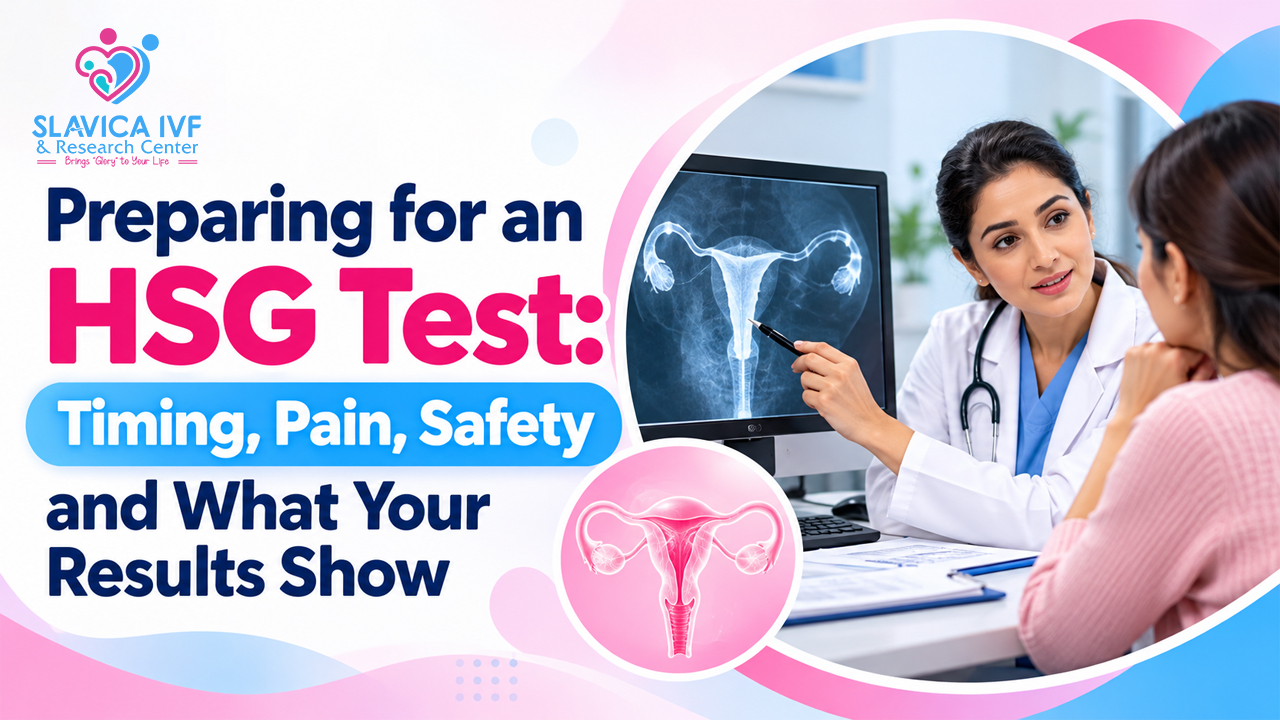
Preparing for an HSG Test: Timing, Pain, Safety and What Your Results Show
An HSG test is often recommended when you are trying to become pregnant and your doctor wants to check whether your fallopian tubes are open and whether the inside of your uterus has a normal shape.
If you have been advised to undergo this investigation, you may have several questions: Which day of your menstrual cycle is best? Does an HSG test hurt? Is it safe? What happens if the results show blocked fallopian tubes?
The key point is that HSG is a short diagnostic X-ray procedure, usually scheduled after menstruation and before ovulation. Some people experience period-like cramping, and most can return to their usual activities soon afterward. The results help guide fertility investigations, but they do not provide a complete assessment of your ability to conceive.
This guide explains how to prepare, what happens during the procedure, what warning signs to recognize and how your results may influence future fertility care.
What Is an HSG Test?
HSG stands for hysterosalpingography. It is a specialized X-ray examination used to assess the uterine cavity and determine whether the fallopian tubes are open.
The fallopian tubes connect the region near the ovaries to the uterus. Normally, fertilization occurs inside a fallopian tube before the developing embryo travels toward the uterus.
During an HSG, a healthcare professional introduces a contrast liquid through the cervix into the uterus. A type of X-ray imaging called fluoroscopy shows how the contrast moves through the reproductive tract.
If the tubes are open, contrast generally flows through them and spills into the pelvic cavity. If the contrast does not pass normally, the images may suggest a blockage or another abnormality that needs further evaluation.
According to RadiologyInfo’s explanation of hysterosalpingography, HSG is particularly useful for evaluating tubal openness and the shape of the uterine cavity.
What can an HSG test detect?
HSG can help identify:
- Possible blockage of one or both fallopian tubes
- Abnormalities in uterine cavity shape
- Possible intrauterine adhesions or scarring
- Findings suggesting a uterine polyp or fibroid affecting the cavity
- Dilated, fluid-filled fallopian tubes, known as hydrosalpinx
However, an HSG image cannot confirm every suspected abnormality or explain every cause of infertility.
Why Might Your Doctor Recommend an HSG?
HSG is commonly used as part of a fertility investigation when pregnancy has not occurred as expected.
Your doctor may recommend it if you have been trying to conceive without success, have a history suggesting tubal damage, or need assessment of the uterine cavity.
Previous pelvic infections, certain pelvic surgeries, or a history of ectopic pregnancy may increase concern about fallopian tube problems. In selected circumstances, HSG may also be used when investigating recurrent pregnancy loss or checking the outcome of previous tubal procedures.
The test is only one part of an infertility evaluation.
Other investigations may include semen analysis, assessment of ovulation, pelvic ultrasound and selected hormone tests.
At Slavica IVF and Research Center, HSG is listed among fertility-assessment services. The purpose of these investigations is to help specialists understand possible barriers to pregnancy before recommending an appropriate treatment plan.
When Is the Best Time to Have an HSG Test?
HSG is generally scheduled after menstrual bleeding has ended and before ovulation.
For someone with a regular menstrual cycle, the appointment is often arranged around days 7–10, although some facilities use a slightly different window.
The appropriate date depends on your menstrual cycle, pregnancy risk and the protocol of the department performing the test.
The main reasons for scheduling it early in the cycle are to reduce the possibility of performing an X-ray examination during an early pregnancy and to improve visualization of the uterine cavity.
The American College of Radiology and Radiological Society of North America’s patient guidance recommends scheduling HSG approximately 7–10 days after the start of menstruation, before ovulation.
What counts as cycle day one?
Cycle day one is the beginning of your menstrual period, according to the definition used by your treating clinic.
Some departments have specific instructions about whether spotting or full menstrual flow counts as the first day. Confirm this when booking rather than calculating an appointment date from an uncertain starting point.
What if your periods are irregular?
If your menstrual cycles are irregular or you do not menstruate regularly, contact your fertility specialist before scheduling HSG.
You may need additional pregnancy assessment and individualized timing.
Do not assume that a standard cycle-day schedule is appropriate for everyone.
Can HSG be done during pregnancy?
No. HSG should not be performed when pregnancy is suspected.
Inform your doctor if there is any possibility that you are pregnant, even if you have recently experienced bleeding.
Some departments require a pregnancy test before the examination. They may also advise avoiding unprotected sexual intercourse from the start of the menstrual period until the procedure.
Follow the pregnancy-prevention instructions given by your HSG provider.
How to Prepare for an HSG Test
Preparation is usually straightforward, but giving your medical team accurate information is essential.
1. Confirm your menstrual-cycle timing
Contact the imaging department or fertility clinic when your period starts and ask which appointment days are appropriate.
If your period is unusually late, lighter than expected or different from normal, mention this before attending.
2. Discuss pregnancy and infection risks
Tell the medical team if you have:
- A possible or confirmed pregnancy
- Fever, unusual vaginal discharge or pelvic pain
- A current or recent pelvic infection
- An untreated sexually transmitted infection
- Previous pelvic inflammatory disease or tubal infection
An active pelvic infection generally needs to be treated before HSG. Your clinician may recommend additional testing or preventive antibiotics in selected circumstances.
Antibiotics are not automatically required for every patient.
3. Report previous contrast reactions
HSG generally involves an iodinated contrast medium.
Tell your doctor if you have previously experienced an allergic-type reaction to an X-ray or CT contrast agent.
Also discuss your relevant medical conditions, medications and any previous problems during imaging procedures.
Your healthcare team will decide whether the planned contrast and procedure are suitable for you.
4. Ask about pain relief
Some patients benefit from an appropriate pain reliever before HSG.
Clinicians may recommend medicines commonly used for menstrual cramps, such as paracetamol or ibuprofen, depending on individual medical circumstances.
Do not take medication solely because another patient received it. Check what is suitable for you, particularly if you have stomach ulcers, kidney disease, medicine allergies, possible pregnancy or other reasons to avoid certain medicines.
5. Ask whether you can eat before the test
Routine HSG is generally performed without general anaesthesia, and fasting is often unnecessary.
However, if your facility plans additional medication, sedation or another procedure, preparation requirements may change.
Follow the exact instructions supplied by your treating team.
6. Wear comfortable clothing
Choose clothing that is easy to change out of. You may need to wear a hospital gown.
Consider bringing a sanitary pad or panty liner because a small amount of fluid or spotting may occur after the examination.
If you are concerned about pain, dizziness or travelling home, arranging someone to accompany you can be helpful.
Your HSG preparation checklist
Before attending, make sure you can answer these questions:
- Is this the correct day of my menstrual cycle?
- Have I followed the pregnancy precautions?
- Have I reported relevant allergies and previous infections?
- Do I know whether I should take pain relief?
- Do I understand the clinic’s eating and medication instructions?
- Do I know whom to contact if I feel unwell afterward?
What Happens During an HSG Test?
HSG is typically an outpatient procedure. The actual imaging may take only a few minutes, although the whole appointment can be longer.
The main steps are as follows.
Step 1: Positioning
You lie on an examination table, usually on your back with your knees bent or supported.
The clinician explains the procedure and positions you for examination.
Step 2: Examination of the cervix
A speculum is gently inserted into the vagina so the cervix can be seen.
The cervix is cleaned to reduce the risk of introducing infection.
Step 3: Insertion of a small catheter
A thin tube is introduced through the cervical opening.
Depending on the equipment and technique, a small balloon or another mechanism may hold it in place.
Some people notice pressure or brief discomfort during this part.
Step 4: Introduction of contrast
The clinician slowly introduces contrast liquid through the catheter.
As the contrast fills the uterus and enters the fallopian tubes, you may experience cramping.
Step 5: X-ray imaging
Fluoroscopy allows the radiologist or other trained clinician to observe how the contrast flows.
You may be asked to change position slightly to obtain clearer images.
If the fallopian tubes are open, contrast usually passes through their ends and disperses into the pelvic cavity.
Step 6: Completion and observation
The catheter is removed after the images are obtained.
You may be asked to remain briefly while the team checks your comfort and confirms that adequate images have been collected.
The American Society for Reproductive Medicine’s HSG patient information describes the procedure and explains how contrast flow is used to assess the reproductive tract.
Is an HSG Test Painful?
An HSG test can cause discomfort, but the intensity varies considerably between patients.
Some people feel mild pressure. Others experience cramps similar to menstrual pain. A smaller number may experience more intense discomfort.
Pain can occur during catheter placement or when contrast fills the uterus and fallopian tubes.
Cramping is often temporary and improves after the contrast injection stops. However, some patients continue to feel mild cramps for several hours.
The amount of pain does not reliably establish whether your fallopian tubes are open or blocked.
If you experience severe pain during the procedure, tell the medical team immediately. You should not feel obliged to remain silent or endure intolerable discomfort.
How can discomfort be managed?
Before the appointment, discuss appropriate pain relief with your doctor.
During the examination, communicate if you feel significant pain, nausea or dizziness.
A clear explanation of each step, gentle technique and appropriate pauses may help make the experience more manageable.
If you have previously experienced severe pain during pelvic examinations, tell the clinician beforehand so your needs can be considered.
What Happens After an HSG Test?
Most patients can go home soon after an uncomplicated HSG.
You may experience mild lower abdominal cramps, light vaginal spotting or a small amount of fluid discharge.
These symptoms generally improve without further treatment.
Use a sanitary pad or liner if necessary. Many radiology departments advise avoiding tampons immediately after the procedure.
You can often return to everyday activities the same day if you feel comfortable. However, take additional rest if you experience cramps or dizziness.
Instructions about sexual intercourse, bathing and other activities vary by department. Some allow intercourse after the procedure, while others recommend a short period of abstinence.
Follow the advice supplied by your treating clinician rather than assuming every hospital follows the same policy.
Warning signs after an HSG test
Mild spotting or short-lived cramps are expected. Certain symptoms are not.
| Symptom | Recommended response |
|---|---|
| Mild, improving cramps | Usually expected; follow aftercare guidance |
| Light spotting | Usually expected for a short period |
| Fever or chills | Contact a medical professional promptly |
| Increasing or severe pelvic pain | Seek prompt assessment |
| Heavy vaginal bleeding | Seek urgent medical advice |
| Foul-smelling discharge | Contact your healthcare provider promptly |
| Rash, swelling or breathing difficulty | Seek emergency care, especially for breathing symptoms |
Although serious complications are uncommon, pelvic infection and contrast-related reactions are recognized risks.
The ASRM patient safety guidance advises contacting a doctor if increasing pain or fever develops after HSG.
Is an HSG Test Safe?
HSG is generally considered a safe diagnostic procedure when performed with appropriate screening and precautions.
However, it is important to understand the potential risks rather than assume that the test is completely risk-free.
Radiation exposure
HSG uses a relatively low dose of ionizing radiation.
The medical team aims to obtain necessary diagnostic images while minimizing exposure.
Although radiation exposure from HSG is low, the examination should not be performed during a suspected pregnancy.
Infection
A pelvic infection can occasionally develop after the procedure.
Risk may be higher in people with previous tubal disease or infection-related damage.
Tell your clinician about relevant medical history. Antibiotics may be considered when clinically indicated.
Contrast reactions
Allergic-type reactions to contrast material are uncommon but possible.
A previous contrast reaction should always be discussed before the examination.
Other complications
Rare complications include fainting, significant pain or injury related to instrumentation.
Your clinician should explain the procedure’s expected benefits, potential risks and reasonable alternatives.
What Do HSG Test Results Show?
An HSG report mainly describes the appearance of the uterine cavity and whether contrast passes through the fallopian tubes.
The results require interpretation in the context of your complete medical history.
| HSG finding | What it may indicate | Possible next step |
|---|---|---|
| Normal uterine cavity and bilateral spill | Both tubes appear open | Continue broader fertility assessment if needed |
| Spill from only one tube | One tube appears open; the other may be obstructed | Review findings and confirm if necessary |
| No visible spill from either tube | Possible bilateral obstruction or temporary spasm | Further assessment before major treatment decisions |
| Dilated contrast-filled tube | Possible hydrosalpinx | Specialist evaluation |
| Irregular uterine cavity or filling defect | Possible polyp, fibroid, adhesion or imaging artifact | Ultrasound, saline infusion imaging or hysteroscopy as appropriate |
What does a normal HSG mean?
A normal HSG generally shows a uterine cavity without a significant detected abnormality and contrast passing through both fallopian tubes.
This is useful information, but it does not guarantee pregnancy.
You may still need evaluation of ovulation, sperm factors, ovarian reserve or other conditions.
What happens if one fallopian tube is blocked?
An apparent blockage in one tube does not necessarily mean pregnancy is impossible.
Pregnancy may still be possible when the other tube is healthy and functioning, depending on additional fertility factors.
A specialist will consider your age, ovulation, reproductive history, the condition of the remaining tube and other test results.
What if both tubes appear blocked?
Bilateral tubal obstruction may significantly affect the possibility of natural conception.
However, one important limitation is that HSG can sometimes suggest a blockage near the uterus because of temporary muscular contraction, catheter positioning or other technical factors.
Therefore, an abnormal result may need confirmation.
The ASRM fertility-evaluation committee opinion specifically advises further evaluation when both tubes appear blocked near their uterine openings.
What is hydrosalpinx?
Hydrosalpinx is a condition in which a fallopian tube becomes enlarged and filled with fluid, commonly following tubal damage.
If HSG suggests hydrosalpinx, your specialist may recommend additional assessment.
This finding can be particularly relevant when planning IVF, because the condition may affect treatment decisions.
What Can an HSG Test Not Tell You?
Although HSG provides valuable information, it is not a complete infertility test.
It does not directly measure egg quality, confirm that ovulation is occurring normally or evaluate sperm quality.
It also cannot reliably diagnose endometriosis or identify every abnormality outside the uterine cavity.
Some uterine findings require clearer assessment with ultrasound, saline infusion sonography or hysteroscopy.
A normal HSG should therefore be interpreted as one reassuring piece of information rather than proof that no fertility problem exists.
Does an HSG Test Increase the Chance of Pregnancy?
HSG is primarily a diagnostic examination, not a fertility treatment.
Some research has found higher subsequent pregnancy rates in selected patients following tubal flushing with oil-based contrast compared with water-based contrast.
However, the findings do not mean that HSG reliably opens damaged tubes or guarantees conception.
Oil-based contrast also has specific safety considerations, including potential effects on thyroid function.
The European Society of Urogenital Radiology’s contrast-media review discusses both the possible fertility benefits and the relevant risks.
The decision about contrast type should be made by the treating medical team rather than treating HSG as a guaranteed fertility-enhancing procedure.
How Do HSG Results Affect IUI and IVF Decisions?
Your HSG findings can help your fertility specialist decide whether additional investigations or treatment are appropriate.
HSG and IUI in Nepal
Intrauterine insemination (IUI) places prepared sperm inside the uterus around the time of ovulation.
Because fertilization usually occurs within a fallopian tube, successful IUI generally requires at least one appropriately functioning tube.
If HSG shows open tubes and other findings are suitable, your specialist may discuss intrauterine insemination (IUI) as a possible option.
However, open tubes alone do not establish whether IUI is the best treatment.
HSG and IVF in Nepal
In vitro fertilization (IVF) involves fertilizing eggs with sperm outside the body and transferring an embryo into the uterus.
Because IVF bypasses the need for fertilization inside the fallopian tubes, it may be considered when significant tubal disease is confirmed.
A finding of blocked tubes does not automatically mean you must begin IVF immediately. The specialist may first need to clarify the diagnosis and assess other fertility factors.
If hydrosalpinx is present, additional management may be recommended before an IVF cycle.
You can explore IVF treatment at Slavica IVF for further information.
The appropriate choice depends on the diagnosis and the individual’s or couple’s circumstances.
HSG Versus Other Fertility Investigations
Different tests examine different aspects of reproductive health.
Pelvic ultrasound: Assesses the uterus, ovaries and surrounding structures, but routine ultrasound does not reliably establish whether both fallopian tubes are open.
Ultrasound-based tubal patency testing: Uses fluid and, in some techniques, contrast or air bubbles to help evaluate tubal openness without X-ray radiation.
Sonohysterography: Uses fluid during ultrasound to examine the uterine cavity more closely.
Hysteroscopy: Uses a small camera to directly inspect the uterine cavity and may allow treatment of certain abnormalities.
Laparoscopy: Allows examination of pelvic structures and can be combined with procedures that assess tubal openness. It is not routinely necessary for every infertility investigation.
Your doctor will choose investigations based on the clinical question, previous findings and individual risk factors.
Preparing for an HSG Test in Kathmandu, Nepal
If you are planning an HSG test in Kathmandu, it is useful to clarify the practical details before making an appointment.
Ask your chosen healthcare provider about its available appointment dates, the required menstrual-cycle timing, pregnancy testing, pain-management options and whether the images will be interpreted by an appropriate specialist.
You should also confirm the total cost, whether the radiology report is included and when you can expect to discuss the findings.
Avoid comparing HSG prices without understanding which services are included.
Slavica IVF and Research Center lists HSG under its fertility-assessment services and is located in Sinamangal, Kathmandu.
Patients who need guidance about infertility investigations can request a consultation to discuss their medical history and the appropriate next steps.
Specific HSG appointment arrangements should be confirmed directly with the clinic.
Frequently Asked Questions About an HSG Test
Can I have an HSG if I have irregular periods?
Possibly, but the appointment timing requires individual assessment. Contact your clinician so pregnancy can be appropriately excluded and the procedure can be scheduled safely.
Do I need general anaesthesia for an HSG?
Most routine HSG examinations are performed without general anaesthesia. Ask about the available pain-management options if you have concerns.
Can I return to work after an HSG?
Many patients can return to normal activities the same day. If you experience significant cramps, dizziness or other discomfort, rest and follow your clinician’s advice.
Does a normal HSG mean I do not need any other fertility tests?
Not necessarily. HSG evaluates the uterine cavity and tubal patency. Fertility assessment may also involve ovulation, semen and other investigations.
Final Thoughts
An HSG test can provide important information about the uterus and fallopian tubes during fertility assessment.
The most useful preparation involves scheduling the procedure at the appropriate point in your menstrual cycle, informing the medical team about pregnancy or infection risks, understanding the possibility of temporary cramping and knowing which symptoms require medical attention.
Most importantly, an HSG report is a starting point for clinical interpretation, not a complete fertility diagnosis.
Whether your results appear normal or suggest a problem, the next step should be based on your complete fertility history and professional advice.
For fertility evaluation and treatment guidance in Kathmandu, contact Slavica IVF and Research Center to discuss your situation and available consultation options.
Medical information notice: This article provides general educational information. It does not replace individualized advice from a qualified clinician. The appropriate timing, preparation and management of HSG findings depend on individual medical circumstances.