- Sinamangal Kathmandu
Nepal -
Sun - Friday 8.00 - 18.00.
Saturday CLOSED
Which IVF Cycle Is Most Successful? Advice from an IVF Doctor in Nepal
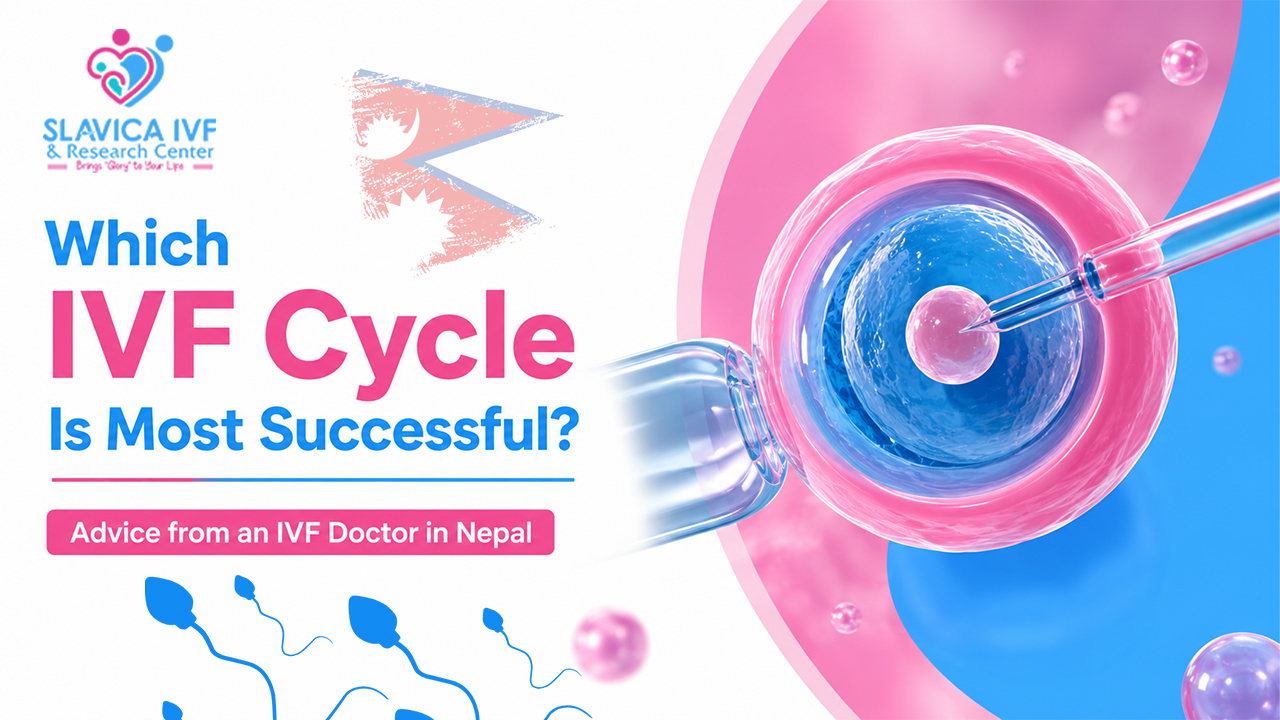
Which IVF Cycle Is Most Successful? Advice from an IVF Doctor in Nepal
For many couples planning fertility treatment, one of the first questions is, “Which IVF cycle is most successful?” The honest answer is that there is no single IVF cycle that works best for everyone.
IVF success depends on several personal factors, including age, egg quality, sperm quality, embryo quality, uterus health, ovarian reserve, and the exact cause of infertility.
In many cases, donor egg IVF or donor embryo treatment may offer higher success when egg quality is the main concern. For couples using their own eggs, an IVF cycle that creates a good-quality blastocyst and transfers it at the right time often gives a better chance than a treatment plan that is not matched to the patient’s condition.
At Slavica IVF and Research Center in Sinamangal, Kathmandu, patients can consult fertility specialists, including Dr. Nikita Dhakal, for personalized IVF planning and fertility care.
Which IVF Cycle Has the Highest Success Rate?
The most successful IVF cycle is usually the one that creates a healthy embryo and prepares the uterus properly for implantation.
Different IVF cycles may work better for different patients depending on their fertility diagnosis.
IVF Cycle Success Comparison
| IVF Cycle Type | When It May Be Most Successful | Key Point |
| Donor Egg IVF | Advanced age, poor egg quality, repeated IVF failure | Often has higher success when egg quality is the main issue |
| Frozen Embryo Transfer | When embryos are available after stimulation | Allows better timing for uterus preparation |
| Blastocyst Transfer | When embryos grow well until day 5 or 6 | Helps select embryos with stronger development potential |
| ICSI-IVF | Male factor infertility | Useful when sperm count, movement, or quality is reduced |
| PGT-A Tested Embryo Transfer | Recurrent miscarriage, older age, repeated failure | May help selected patients, but is not needed for everyone |
| Natural or Mild IVF | Low ovarian reserve or low-medication preference | May suit selected patients but can produce fewer eggs |
What Does “Most Successful IVF Cycle” Really Mean?
When couples ask about the most successful IVF cycle, they may be thinking about different outcomes.
Some may want the highest chance of pregnancy after one embryo transfer. Others may want the highest chance of live birth after one egg retrieval. Some couples may be focused on reducing miscarriage risk, lowering cost, avoiding repeated cycles, or choosing the safest treatment option.
Pregnancy Rate vs Live Birth Rate
In IVF treatment, the most meaningful outcome is usually the live birth rate, not just a positive pregnancy test.
A pregnancy test can be positive, but pregnancy loss may still happen. That is why IVF doctors and fertility clinics often focus on live birth outcomes rather than only pregnancy rates.
Why Age Is One of the Biggest IVF Success Factors
Age is one of the most important factors in IVF success, especially when a woman is using her own eggs.
As age increases, both egg quantity and egg quality usually decline. The risk of chromosomal abnormalities in embryos also increases with age, which can lower implantation chances and increase miscarriage risk.
Why Personalized IVF Planning Matters
A woman under 35 using her own eggs usually has a better chance of IVF success than a woman over 40 using her own eggs. However, every patient is different.
Some younger women may have low ovarian reserve, while some older women may still respond well to ovarian stimulation. This is why an experienced IVF doctor in Nepal should evaluate each case individually before recommending a treatment plan.
Fresh IVF Cycle vs Frozen Embryo Transfer
A fresh IVF cycle means the embryo is transferred in the same cycle in which eggs are collected. A frozen embryo transfer means embryos are frozen first and transferred in a later cycle.
Both options can be successful. The better choice depends on the patient’s hormones, uterine lining, embryo quality, and overall condition.
When Frozen Embryo Transfer May Be Preferred
Frozen embryo transfer may be recommended when hormone levels are high after stimulation, the uterine lining needs more preparation, there is a risk of ovarian hyperstimulation, genetic testing is planned, or the patient needs recovery after egg retrieval.
When Fresh Embryo Transfer May Be Suitable
Fresh transfer may be suitable when hormone levels are stable, the uterine lining is ready, embryo development is good, and there is no high risk of complications.
The key is not simply choosing fresh or frozen. The real goal is to transfer the embryo when the uterus is most ready.
Is Donor Egg IVF the Most Successful Cycle?
For some patients, yes. Donor egg IVF can be one of the most successful IVF options, especially when poor egg quality is the main cause of infertility.
This may apply to women with advanced reproductive age, repeated poor embryo quality, premature ovarian insufficiency, or repeated IVF failure caused by egg-related factors.
Why Donor Egg IVF Can Improve Success
Donor eggs usually come from younger, medically screened donors. Better egg quality can improve the chance of creating healthy embryos.
However, donor egg IVF is not the first choice for every couple. Many patients can still try IVF with their own eggs depending on their age, ovarian reserve, fertility history, and personal preference.
A consultation at an IVF clinic in Nepal can help couples understand whether own-egg IVF, donor egg IVF, donor embryo treatment, or another fertility option is more suitable.
Is Blastocyst Transfer More Successful?
A blastocyst is an embryo that has developed for about five or six days after fertilization.
Blastocyst transfer is often preferred because embryos that reach this stage have shown stronger growth in the laboratory. This may help embryologists select embryos with better implantation potential.
Is Blastocyst Transfer Right for Everyone?
Not always. Some patients may have fewer eggs or fewer embryos, and not all embryos reach the blastocyst stage. In such cases, an earlier transfer may sometimes be considered.
Blastocyst transfer can be successful, but it is not a guarantee. IVF success still depends on embryo quality, uterus health, lab quality, and proper timing.
Does PGT-A Make IVF More Successful?
PGT-A stands for preimplantation genetic testing for aneuploidy. It checks embryos for chromosome number before transfer.
PGT-A may be useful in selected cases, especially for patients with repeated miscarriage, repeated implantation failure, advanced maternal age, previous chromosomal abnormality, or several embryos available for testing.
Is PGT-A Needed for Every IVF Patient?
No. PGT-A is not automatically required for every IVF cycle.
It may help some patients, but it should be recommended based on age, diagnosis, embryo number, previous IVF history, and treatment goals.
For couples considering IVF in Nepal, genetic testing should be discussed carefully with a fertility specialist before making a decision.
Is ICSI-IVF More Successful Than Conventional IVF?
ICSI stands for intracytoplasmic sperm injection. In ICSI-IVF, one sperm is injected directly into one egg in the laboratory.
ICSI is commonly used when there is male factor infertility.
When ICSI-IVF May Be Recommended
ICSI-IVF may be helpful in cases of low sperm count, poor sperm movement, abnormal sperm shape, previous fertilization failure, surgically retrieved sperm, or selected sperm DNA concerns.
However, ICSI is not automatically better for all couples. If sperm quality is normal, conventional IVF may be enough.
Couples choosing an IVF center in Kathmandu should ask whether the clinic provides semen analysis, ICSI, embryo culture, embryo freezing, and male fertility evaluation.
Conventional Stimulation vs Mild IVF
Conventional IVF uses hormone injections to stimulate the ovaries to produce multiple eggs. Mild IVF uses lower doses of medicines and may produce fewer eggs.
The better option depends on ovarian reserve, age, previous response, safety, and treatment goals.
When Conventional IVF May Be Better
Conventional IVF may be suitable when the patient has normal ovarian reserve, more eggs are needed, embryo freezing is planned, PGT-A is being considered, or the couple wants more embryos from one egg retrieval.
When Mild IVF May Be Better
Mild IVF may be suitable for patients with low ovarian reserve, sensitivity to medicines, risk of ovarian hyperstimulation, preference for lower medication exposure, or poor response to previous high-dose stimulation.
More eggs do not always mean better success. The goal is to obtain mature, usable eggs and healthy embryos safely.
First IVF Cycle vs Second or Third IVF Cycle
Some couples succeed in the first IVF cycle, while others need more than one attempt.
A failed first IVF cycle does not always mean IVF will never work. Sometimes the first cycle gives the doctor important information that can improve the next plan.
What Doctors Learn From a Failed IVF Cycle
A previous IVF cycle can show how the ovaries respond to medicines, how many eggs mature, whether fertilization happens normally, how embryos develop, whether the uterine lining responds well, and whether the treatment protocol needs changes.
In many cases, the second IVF cycle becomes more personalized because the doctor has more information from the first attempt.
Factors That Decide the Most Successful IVF Cycle for You
The most successful IVF cycle is not chosen randomly. It should be planned after a complete fertility evaluation.
Important IVF Success Factors
| Factor | Why It Matters |
| Age | Strongly affects egg quality and embryo chromosome health |
| AMH and AFC | Help estimate ovarian reserve |
| Sperm Quality | Helps decide whether ICSI may be needed |
| Uterine Lining | Affects implantation |
| Fallopian Tube Condition | Hydrosalpinx can reduce IVF success |
| Endometriosis | May affect eggs, embryos, and implantation |
| PCOS | Can affect ovulation and ovarian stimulation response |
| Previous IVF History | Helps improve future treatment plans |
| Embryo Quality | Directly affects implantation chances |
| Lifestyle and Health | Weight, smoking, diabetes, thyroid issues, and stress may matter |
Before starting IVF, patients should receive a clear explanation of their diagnosis, treatment options, estimated chances, risks, and costs.
What Tests Help Choose the Best IVF Cycle?
A fertility specialist may recommend several tests before deciding the best IVF cycle.
Common Fertility Tests Before IVF
These may include AMH blood test, antral follicle count ultrasound, semen analysis, thyroid and prolactin testing, infectious disease screening, uterine cavity evaluation, hormone profile, genetic testing in selected cases, and evaluation for PCOS, endometriosis, or fibroids.
These tests help avoid random treatment and allow the doctor to create a plan based on the couple’s actual diagnosis.
Which IVF Cycle Is Best for Poor Ovarian Reserve?
Poor ovarian reserve means the ovaries may produce fewer eggs during stimulation.
In this situation, the best IVF cycle may include personalized stimulation, mild or modified stimulation, antagonist protocol, duo stimulation in selected cases, egg or embryo freezing across cycles, or donor egg IVF if own-egg success is very low.
Why Honest Counseling Is Important
There is no universal answer for poor ovarian reserve. Some patients may still create a healthy embryo with their own eggs, while others may need to consider donor eggs.
A careful and honest consultation is important so patients understand realistic expectations.
Which IVF Cycle Is Best for PCOS?
Patients with PCOS may respond strongly to fertility medicines. The main goal is to collect mature eggs while reducing the risk of ovarian hyperstimulation syndrome.
IVF Options for PCOS Patients
Doctors may consider lower-dose stimulation, antagonist protocol, careful monitoring, safer trigger selection, freeze-all strategy in selected cases, and frozen embryo transfer later.
For many PCOS patients, frozen embryo transfer may be considered if hormone levels are high or the body needs time to recover.
Which IVF Cycle Is Best for Male Infertility?
When sperm count, movement, or shape is significantly abnormal, ICSI-IVF may be recommended.
Male fertility evaluation should not stop at one semen report. A fertility specialist may also assess repeat semen analysis, infection history, varicocele, hormonal causes, lifestyle factors, sperm DNA fragmentation in selected cases, and the need for surgical sperm retrieval.
Why Both Partners Should Be Evaluated
IVF success depends on both egg and sperm health. A good fertility clinic should evaluate both partners before recommending treatment.
Which IVF Cycle Is Best After Repeated IVF Failure?
Repeated IVF failure can be emotionally difficult. The next IVF cycle should not simply repeat the same steps without deeper review.
What Should Be Rechecked After IVF Failure?
A doctor may reassess embryo quality, egg maturity, fertilization rate, sperm DNA quality, uterine lining thickness, hydrosalpinx, endometriosis, adenomyosis, thyroid levels, prolactin, diabetes, clotting concerns, lab conditions, embryo culture, transfer technique, and whether PGT-A may be useful.
The most successful next cycle is often the one planned from the lessons of previous IVF attempts.
Why Single Embryo Transfer Can Still Be Successful
Some patients believe transferring two or three embryos always improves success. However, this is not always the safest choice.
Multiple embryo transfer can increase the chance of twins or higher-order pregnancy. Multiple pregnancy carries higher risks for both mother and babies, including premature birth and pregnancy complications.
Success Should Also Mean Safety
A successful IVF cycle is not only about getting pregnant. It is also about achieving the safest possible healthy pregnancy.
How to Improve the Chance of a Successful IVF Cycle
Patients cannot control every factor, but some steps may support IVF treatment.
Helpful Steps Before and During IVF
Start fertility evaluation early, complete testing for both partners, follow medicine instructions carefully, attend monitoring appointments, avoid smoking and tobacco exposure, maintain a healthy weight, manage thyroid problems, diabetes, or hypertension, discuss supplements only with your doctor, get enough sleep, and ask questions before embryo transfer.
Avoid clinics or claims that promise guaranteed IVF success. IVF is advanced medical care, but no ethical clinic can promise pregnancy for every patient.
Questions to Ask Your IVF Doctor Before Choosing a Cycle
Before starting treatment, it is important to ask clear questions.
Important Questions for Your IVF Consultation
Ask your IVF doctor what the main cause of infertility is, whether IVF, ICSI, IUI, or another treatment is needed, which protocol is recommended and why, how many eggs may be expected, whether fresh or frozen transfer is better, whether PGT-A is useful, what the risks of ovarian hyperstimulation are, how many embryos should be transferred, what happens if the first cycle fails, and what your realistic chance of success is.
A good consultation should provide clear answers without pressure.
Why Choosing the Right IVF Doctor Matters
Choosing the right IVF doctor in Nepal matters because IVF is not just one procedure. It is a series of important decisions.
The doctor must decide which tests are needed, which stimulation protocol is safest, when to trigger ovulation, whether ICSI is needed, whether embryos should be frozen, when the uterus is ready, how many embryos to transfer, and what to change if the cycle fails.
IVF Care at Slavica IVF and Research Center
At Slavica IVF and Research Center, patients looking for IVF in Nepal can consult a fertility team in Kathmandu for infertility evaluation, assisted reproductive treatment, and personalized IVF planning.
Final Answer: Which IVF Cycle Is Most Successful?
The most successful IVF cycle is the cycle that matches the patient’s diagnosis.
For many couples using their own eggs, success is often higher when IVF produces a good-quality blastocyst and the uterus is prepared properly for transfer.
For patients with poor egg quality or advanced reproductive age, donor egg IVF or donor embryo treatment may offer a higher chance.
For male factor infertility, ICSI-IVF may be more suitable.
For selected patients with recurrent loss or repeated IVF failure, PGT-A may be discussed, but it is not necessary for everyone.
The best next step is a personalized fertility consultation with an experienced IVF doctor in Nepal, such as Dr. Nikita Dhakal at Slavica IVF, where both partners can be evaluated and the most suitable IVF cycle can be planned.
Frequently Asked Questions
Which IVF cycle is most successful?
The most successful IVF cycle depends on the patient. Donor egg IVF may offer higher success when egg quality is poor. For patients using their own eggs, a good-quality blastocyst transfer with proper uterine preparation is often a strong option.
Is frozen embryo transfer more successful than fresh transfer?
Frozen embryo transfer may be better for some patients because it allows the uterus to be prepared in a separate cycle. Fresh transfer may still work well when hormone levels and uterine lining are suitable.
Is the first IVF cycle usually successful?
Some couples succeed in the first IVF cycle, while others need more than one attempt. The first cycle can also provide useful information about ovarian response, egg quality, fertilization, and embryo development.
Is donor egg IVF the most successful option?
Donor egg IVF can be one of the most successful options for patients with poor egg quality, advanced age, or repeated IVF failure related to eggs. However, it is not required for every patient.
Does ICSI increase IVF success?
ICSI can improve fertilization in male factor infertility. However, it may not improve outcomes for every couple if sperm quality is normal.
Does PGT-A guarantee IVF success?
No. PGT-A does not guarantee pregnancy. It may help selected patients, but it is not necessary for every IVF cycle.
How do I choose an IVF clinic in Nepal?
Look for qualified fertility doctors, transparent counseling, proper diagnosis, a good embryology lab, clear communication, ethical success-rate discussion, and individualized treatment planning.
Reviewed by Dr. Nikita Dhakal, Best IVF Doctor in Nepal

Dr. Nikita Dhakal is an experienced fertility specialist associated with Slavica IVF and Research Center in Kathmandu. The doctor specializes in IVF, ICSI, fertility evaluation, embryo transfer planning, recurrent IVF failure, and personalized reproductive care for couples in Nepal.