- Sinamangal Kathmandu
Nepal -
Sun - Friday 8.00 - 18.00.
Saturday CLOSED

How Does Thyroid Affect Fertility in Women? Symptoms, Causes and Treatment
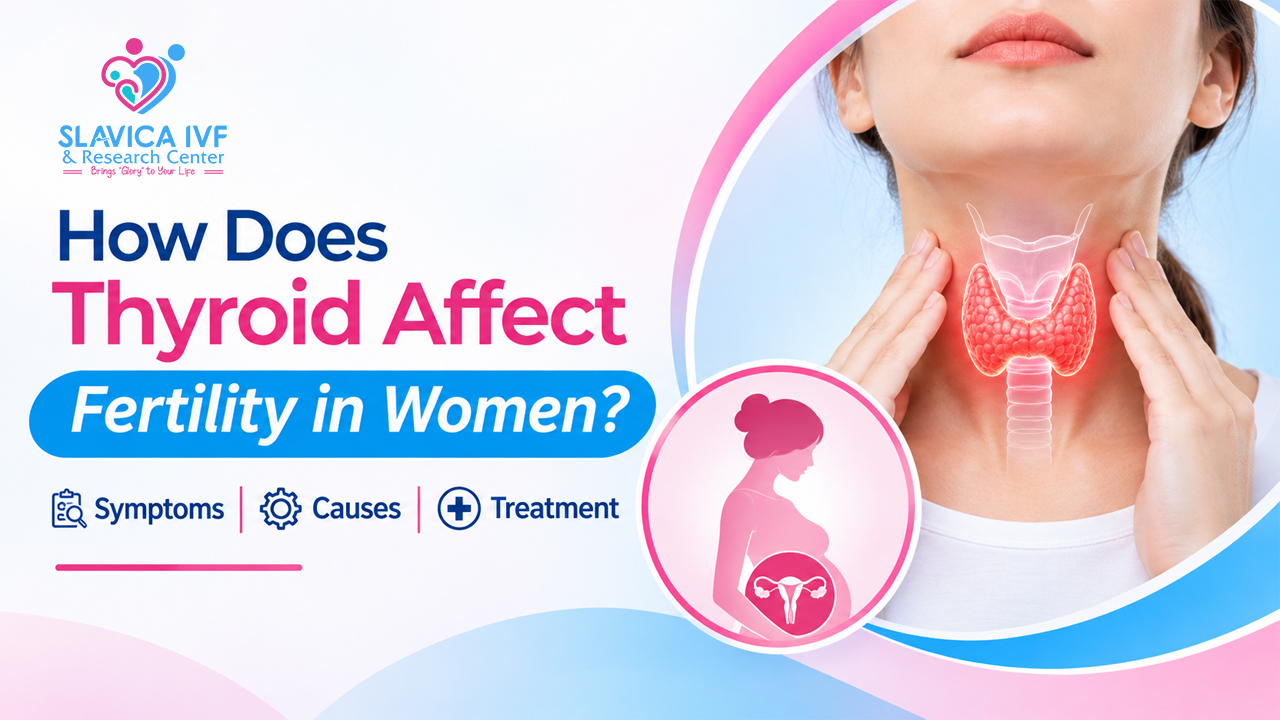
How Does Thyroid Affect Fertility in Women? Symptoms, Causes and Treatment
Thyroid problems can affect a woman’s ability to conceive by disrupting menstrual cycles, ovulation and the hormones that support reproductive health. Both an underactive thyroid (hypothyroidism) and an overactive thyroid (hyperthyroidism) may contribute to fertility difficulties, particularly when the condition is significant or untreated.
However, having a thyroid problem does not mean you cannot become pregnant. Many women with thyroid disorders conceive successfully, especially when their condition is properly diagnosed and managed.
If you have irregular periods, unexplained difficulty conceiving or a history of thyroid disease, understanding the connection between thyroid and fertility can help you decide when to seek medical advice.
This guide explains how thyroid disorders affect female fertility, common symptoms, useful blood tests, treatment options and when fertility care may be appropriate.
What Is the Thyroid Gland, and Why Is It Important for Fertility?
The thyroid is a small, butterfly-shaped gland situated at the front of your neck. It produces hormones that help regulate how your body uses energy and maintains normal bodily functions.
The two main thyroid hormones are:
- Thyroxine (T4): The principal hormone produced by the thyroid gland.
- Triiodothyronine (T3): A biologically active thyroid hormone involved in regulating numerous body functions.
Thyroid activity is controlled partly by thyroid-stimulating hormone (TSH), released by the pituitary gland in the brain.
When thyroid hormone levels are too low or too high, this hormonal control system becomes disrupted.
Thyroid hormones are also connected to reproductive processes. They help maintain the hormonal environment needed for regular menstruation and ovulation.
According to the US National Institute of Diabetes and Digestive and Kidney Diseases (NIDDK), thyroid disorders can be associated with menstrual irregularities and fertility problems.
The extent of their effect depends on the type and severity of thyroid dysfunction.
How Does Thyroid Affect Fertility in Women?
Thyroid dysfunction can affect female fertility through several pathways, especially by disrupting the hormonal processes that control menstruation and egg release.
1. Changes in Ovulation
Ovulation occurs when a mature egg is released from an ovary.
Normal ovulation depends on coordinated signals involving the brain, pituitary gland and ovaries.
Significant thyroid hormone imbalance can interfere with these signals.
Some women may ovulate less frequently, while others may stop ovulating temporarily. Without regular ovulation, predicting the fertile window and achieving pregnancy can become more difficult.
However, not every woman with abnormal thyroid function experiences an ovulation problem.
2. Irregular Menstrual Cycles
Both hypothyroidism and hyperthyroidism can affect menstrual patterns.
Some women develop longer or unpredictable cycles, unusually heavy bleeding, lighter periods or missed periods.
These changes may make it harder to estimate when ovulation occurs.
Irregular menstruation also has other possible causes, including polycystic ovary syndrome (PCOS), elevated prolactin, changes in ovarian function and certain medical conditions.
A thyroid disorder should therefore be considered as one possible explanation, not assumed to be the only cause.
3. Changes in Reproductive Hormone Regulation
Thyroid hormones interact with the reproductive endocrine system.
In some cases, significant hypothyroidism is associated with increased prolactin levels, which can interfere with normal ovulation.
Thyroid dysfunction may also affect the balance of hormones involved in menstrual regulation.
Correcting an established thyroid disorder can improve reproductive hormone function in some women, although it does not guarantee pregnancy.
4. Pregnancy Health
Thyroid hormone is particularly important during early pregnancy.
Untreated, overt hypothyroidism or poorly controlled overt hyperthyroidism can increase the risk of maternal and pregnancy complications.
However, these concerns should not be applied automatically to every borderline laboratory result.
The American Thyroid Association’s 2026 guidelines emphasise distinguishing the type and severity of thyroid dysfunction when making treatment decisions before and during pregnancy.
Hypothyroidism and Female Fertility
Hypothyroidism occurs when the thyroid gland does not produce enough thyroid hormones.
When thyroid hormone levels are inadequate, several body functions may slow down, and menstrual or reproductive hormone regulation may be affected.
How Can Hypothyroidism Make Pregnancy Difficult?
Significant untreated hypothyroidism may lead to irregular or absent ovulation.
Periods may become heavier, less predictable or occasionally absent.
Some women also experience elevated prolactin, which may interfere with egg release.
Overt hypothyroidism is an established medical concern in women experiencing infertility.
However, women whose hypothyroidism is adequately controlled with prescribed treatment can often have fertility and pregnancy outcomes comparable to women without thyroid disease.
Common Symptoms of Hypothyroidism
Symptoms can include:
- Persistent tiredness or low energy.
- Unexplained weight gain or difficulty managing weight.
- Increased sensitivity to cold.
- Dry skin and thinning hair.
- Constipation.
- Heavy or irregular menstrual periods.
- Slower heart rate.
- Difficulty concentrating or low mood.
Symptoms may develop gradually, and some women have very few noticeable signs.
These symptoms are not specific to thyroid disease. A medical history and appropriate blood tests are needed for diagnosis.
Common Causes
Hashimoto’s thyroiditis, an autoimmune condition in which the immune system attacks thyroid tissue, is a common cause.
Other causes include thyroid inflammation, previous thyroid surgery, certain medicines and, in some settings, insufficient or excessive iodine intake.
The correct treatment depends on the underlying cause and laboratory findings.
Hyperthyroidism and Female Fertility
Hyperthyroidism means the thyroid gland produces too much thyroid hormone.
It can accelerate various body functions and disturb the normal menstrual cycle.
How Does Hyperthyroidism Affect Ovulation?
Overactive thyroid function may cause lighter, less frequent or absent periods.
Some women experience irregular ovulation, which may reduce the opportunity for conception.
Graves’ disease, an autoimmune condition, is a common cause of hyperthyroidism.
According to NIDDK’s hyperthyroidism guidance, untreated hyperthyroidism can affect menstrual cycles, fertility and pregnancy.
Symptoms of Hyperthyroidism
Common symptoms include:
- Rapid or irregular heartbeat.
- Unexplained weight loss, sometimes despite increased appetite.
- Excessive sweating or heat intolerance.
- Trembling hands.
- Nervousness, irritability or anxiety.
- Difficulty sleeping.
- Frequent bowel movements.
- Muscle weakness.
- Changes in menstrual periods.
Some women also develop swelling in the front of the neck. Graves’ disease can cause eye symptoms.
An untreated overactive thyroid may pose important health risks, particularly during pregnancy.
Women planning pregnancy should discuss treatment with a qualified clinician rather than stopping medication independently.
Hypothyroidism vs Hyperthyroidism: Key Differences
| Feature | Hypothyroidism | Hyperthyroidism |
|---|---|---|
| Thyroid function | Produces insufficient hormone | Produces excessive hormone |
| TSH in typical primary disease | Usually elevated | Usually suppressed |
| Common energy symptoms | Fatigue, sluggishness | Restlessness, fatigue, tremor |
| Weight changes | Weight gain may occur | Weight loss may occur |
| Temperature sensitivity | Feeling unusually cold | Feeling unusually hot |
| Menstrual changes | Often heavy or irregular bleeding | Often lighter or less frequent periods |
| Fertility effect | May disrupt ovulation | May disrupt ovulation |
| Common treatment | Levothyroxine replacement | Treatment based on cause, sometimes antithyroid medicines |
This comparison describes common patterns, not a diagnostic rule. Central thyroid disorders, pregnancy-related changes and other medical conditions can produce different laboratory patterns.
Can Mild Thyroid Problems Affect Fertility?
This question requires particular care because the evidence is not as clear as it is for overt thyroid disease.
What Is Subclinical Hypothyroidism?
Subclinical hypothyroidism generally means that TSH is above the appropriate reference range while free T4 remains within its reference range.
Many women with this finding have no obvious symptoms.
Mildly elevated TSH can sometimes return to normal on repeat testing.
Does Every High TSH Result Require Medicine?
No.
The interpretation depends on the laboratory reference interval, free T4, previous results, symptoms, pregnancy status, thyroid antibodies and clinical circumstances.
Importantly, a TSH of 2.5 mIU/L is not a universal diagnostic cutoff for hypothyroidism in every woman attempting pregnancy.
Two major professional guidance documents illustrate why individualised decisions matter:
The 2024 American Society for Reproductive Medicine (ASRM) guideline found insufficient evidence that routine levothyroxine treatment of subclinical hypothyroidism improves fertility outcomes.
The 2026 American Thyroid Association guideline recommends confirming mild abnormalities where practical and allows consideration of treatment for persistent subclinical hypothyroidism in selected women planning pregnancy.
These recommendations reflect different interpretations of limited evidence.
For women already taking levothyroxine for established hypothyroidism, the ATA considers a preconception TSH target of approximately 0.5–2.5 mIU/L reasonable. That is a treatment target for a specific clinical situation, not proof that every woman above 2.5 needs medication.
A clinician should explain whether an abnormal result represents a condition requiring treatment or a finding best managed with monitoring.
What Tests Help Evaluate Thyroid Problems and Fertility?
Thyroid disease cannot be diagnosed reliably from symptoms alone.
A clinician may recommend the following investigations depending on medical history, examination and reproductive concerns.
1. Thyroid-Stimulating Hormone (TSH)
TSH is a principal blood test used to assess thyroid function.
A high TSH commonly suggests an underactive thyroid, while a suppressed TSH may suggest excessive thyroid activity.
However, TSH must be interpreted alongside other results and clinical circumstances.
Pregnancy can change the expected range, so pregnancy-specific interpretation is important.
2. Free T4
Free T4 helps determine how much circulating thyroid hormone is available.
It is particularly useful when TSH is abnormal and when distinguishing overt thyroid disease from subclinical changes.
3. T3 Testing
T3 measurement may be helpful when hyperthyroidism is suspected, particularly if TSH is suppressed but free T4 does not fully explain the findings.
It is not necessary for every fertility assessment.
4. Thyroid Antibody Tests
A clinician may consider thyroid peroxidase antibodies (TPOAb) when evaluating possible autoimmune thyroid disease.
Positive antibodies can indicate an increased likelihood of thyroid dysfunction, but they do not automatically mean thyroid hormone treatment is necessary.
For women with normal thyroid function and positive TPO antibodies, the 2026 ATA guideline does not recommend levothyroxine solely to improve fertility outcomes.
Monitoring may be more appropriate.
5. Other Fertility Investigations
If pregnancy has not occurred, testing should consider causes beyond the thyroid.
Depending on the history, an evaluation may involve assessment of ovulation, prolactin, ovarian reserve, pelvic anatomy, fallopian tubes and sperm factors.
The 2026 ASRM fertility evaluation guidance recommends an individualised, systematic and efficient investigation rather than ordering every test automatically.
Do All Women Trying to Conceive Need Thyroid Testing?
Professional recommendations are not identical.
The 2026 ATA guideline recommends TSH testing in women presenting with infertility or recurrent miscarriages, while ASRM’s 2024 guidance takes a more selective approach to testing and treatment for subtle thyroid abnormalities.
Women with known thyroid disease, symptoms, menstrual irregularity or other relevant risks particularly warrant discussion of testing.
The testing decision should be made with a clinician rather than relying on a single online TSH threshold.
Can Thyroid Problems Cause Miscarriage?
Untreated overt thyroid disease can increase pregnancy risks, including miscarriage.
This does not mean every woman with thyroid disease will experience pregnancy loss.
Nor does it mean that thyroid disease is responsible for every miscarriage.
Miscarriage has many possible causes, including chromosomal abnormalities and other medical or reproductive factors.
For mild thyroid abnormalities and thyroid antibody positivity, the relationship between laboratory findings, pregnancy outcomes and the benefits of treatment is more complicated.
Women experiencing recurrent pregnancy loss should receive appropriate evaluation rather than assuming that a mildly elevated TSH explains everything.
Treatment of Thyroid Problems in Women Trying to Conceive
The first goal is to identify the type and severity of thyroid disorder and determine whether treatment is indicated.
1. Treatment for Hypothyroidism
When clinically indicated, hypothyroidism is generally treated with levothyroxine, a synthetic form of thyroid hormone.
The medication replaces hormone that the body cannot produce adequately.
Treatment may help restore more normal menstrual and ovulatory function in women whose fertility problems are related to significant hypothyroidism.
The dosage is selected according to thyroid function, clinical circumstances and follow-up test results.
It is important to avoid both undertreatment and overtreatment.
Women who become pregnant while taking levothyroxine should contact their treating clinician promptly because thyroid hormone requirements often increase during pregnancy.
Do not stop, start or change thyroid medication without an appropriate treatment plan.
2. Treatment for Hyperthyroidism
Treatment depends on the cause and severity.
Some patients require antithyroid medicines. In selected circumstances, surgery or other treatment may be considered.
Medication choices are especially important when pregnancy is planned or already established because some treatments carry pregnancy-related risks.
Women taking antithyroid medicines should discuss pregnancy plans with their treating clinician in advance.
Radioactive iodine treatment is not used during pregnancy, and people receiving it before conception require specific medical advice about when it is safe to try.
3. Treatment for Mild or Borderline Abnormalities
Not every mildly abnormal TSH result requires immediate medication.
Repeat testing may be useful when a small abnormality is first discovered.
If the finding persists, clinicians can discuss whether monitoring or treatment is more appropriate.
Decisions should consider the severity of the abnormality, the possibility of progression, fertility treatment timing and the patient’s preferences.
4. Nutrition, Iodine and Lifestyle
Adequate iodine is necessary for thyroid hormone production, but excessive iodine can also disturb thyroid function.
Women planning pregnancy may benefit from appropriate nutritional and preconception counselling.
Do not assume iodine supplements, herbal thyroid products or advertised fertility supplements are harmless or capable of correcting a thyroid disorder.
Balanced nutrition, appropriate physical activity, sufficient sleep and management of relevant medical conditions support general health, but they do not replace thyroid treatment when it is needed.
Slavica IVF and Research Center lists treatment of endocrine disorders and preconception counselling among its services.
How Long After Thyroid Treatment Can Pregnancy Occur?
There is no single timeline.
If significant thyroid dysfunction has disrupted ovulation, menstrual regularity may improve after effective treatment.
However, improvement in thyroid function does not guarantee immediate conception.
The time needed depends on the diagnosis, response to treatment, age, ovulation pattern, other fertility factors and any concurrent medical conditions.
Women with overt hyperthyroidism may need more extensive preconception planning before pregnancy is recommended.
Women undergoing fertility assessment should discuss follow-up testing and treatment timing with their clinician.
Avoid postponing fertility evaluation indefinitely while repeatedly pursuing a particular TSH number without a clear medical reason.
Does Having a Thyroid Problem Mean You Need IVF?
No. A thyroid disorder alone is not an indication for IVF.
When a thyroid condition is contributing to irregular ovulation, appropriate treatment may improve the chance of natural conception.
However, fertility problems can involve more than one factor.
A person may have thyroid disease alongside PCOS, tubal disease, endometriosis, age-related fertility changes or a sperm-related problem.
Treating the thyroid does not necessarily correct those other conditions.
When Might Additional Fertility Treatment Help?
Further fertility care may be appropriate when pregnancy does not occur despite treatment of a diagnosed thyroid problem or when investigations identify additional factors.
Possible next steps include:
Ovulation management: If ovulation remains irregular after appropriate investigation, a specialist may discuss ovulation induction, depending on the underlying cause.
Intrauterine insemination (IUI): IUI may be considered when sperm findings, tubal status, ovulation and other clinical factors make it suitable.
In vitro fertilisation (IVF): IVF may be considered for certain combinations of tubal, sperm, ovulatory, age-related or otherwise complex fertility problems.
The choice between these approaches should be made from the complete fertility assessment, not from thyroid results alone.
For a broader explanation, read Slavica’s article on whether infertility treatment always means IVF.
Planning Pregnancy When You Have a Thyroid Disorder
A practical preconception plan can help you discuss the right questions with your healthcare professional.
Review Your Thyroid Diagnosis
Know whether you have hypothyroidism, hyperthyroidism, autoimmune thyroid disease or a previously borderline laboratory result.
Bring any existing blood-test reports and a list of medicines or supplements.
Discuss Medication and Monitoring
Ask whether your current medication is suitable while trying to conceive and what monitoring will be needed if pregnancy occurs.
For women taking levothyroxine, pregnancy may require timely reassessment of the dose.
Iron- and calcium-containing prenatal supplements can interfere with levothyroxine absorption. They generally need to be separated from levothyroxine by several hours according to clinical instructions.
Consider Overall Fertility Health
Regular thyroid function is only one part of reproductive health.
Menstrual history, age, previous pregnancies, other illnesses and sperm factors may all be relevant.
Preconception counselling should also address appropriate nutrition, medication safety and other general pregnancy-health measures.
Have a Plan for a Positive Pregnancy Test
Women with established thyroid disease should contact their treating clinician promptly after confirming pregnancy.
Do not wait for obvious thyroid symptoms to appear before asking whether blood tests or medication review are needed.
When Should You See a Fertility Specialist?
A fertility assessment is appropriate when pregnancy has not occurred after a reasonable period of trying or when a known medical condition suggests that evaluation should begin sooner.
According to the 2026 ASRM guidance, evaluation is generally recommended:
- After 12 months of regular unprotected intercourse when the woman is younger than 35.
- After 6 months when the woman is 35 or older.
- Earlier when a condition associated with infertility is already known.
Earlier advice may be appropriate for absent or markedly irregular periods, known thyroid dysfunction, prior fertility problems or other relevant reproductive concerns.
A fertility specialist can help determine whether thyroid findings explain the symptoms, whether another condition may be present and what investigations or treatment are appropriate.
If a male partner is involved, fertility assessment should consider both partners rather than assuming the thyroid is the only possible factor.
Slavica IVF and Research Center in Sinamangal, Kathmandu lists fertility assessment, endocrine-disorder treatment, ovulation induction, IUI and IVF services.
Its published clinical team includes Dr. Nikita Dhakal, MD in Obstetrics and Gynaecology, listed as an IVF specialist.
The availability of specific thyroid blood tests, dedicated endocrinology consultations and individual treatment arrangements should be confirmed with the center.
Frequently Asked Questions About Thyroid and Fertility
Can I get pregnant if I have hypothyroidism?
Yes. Many women with hypothyroidism become pregnant, especially when the condition is appropriately treated and thyroid function is adequately controlled. Additional fertility assessment may be needed if pregnancy does not occur.
Can thyroid medication improve fertility?
When significant hypothyroidism is disrupting ovulation, appropriate treatment can help restore more normal reproductive function. However, thyroid medication does not reliably improve fertility in every woman with a borderline TSH result.
Is a TSH of 3 or 4 too high for pregnancy?
Not necessarily. Interpretation depends on the laboratory reference range, whether pregnancy has occurred, free T4, existing thyroid treatment and other clinical factors. A particular number cannot be interpreted reliably in isolation.
Can thyroid antibodies cause infertility?
Thyroid autoimmunity can be associated with certain reproductive risks, but positive thyroid antibodies with normal thyroid function do not automatically establish the cause of infertility. Current evidence does not support levothyroxine solely to improve fertility in all antibody-positive women with normal thyroid hormone levels.
Can thyroid disease affect IVF treatment?
Yes. Thyroid status can be relevant during ovarian stimulation and early pregnancy. A fertility specialist may coordinate thyroid monitoring and treatment with the clinician managing the thyroid condition.
Is thyroid disease the same as PCOS?
No. They are different medical conditions. Both may contribute to menstrual irregularity and ovulation problems, and they can coexist. Proper evaluation helps identify which condition, if either, is affecting fertility.
Key Takeaways
Thyroid hormones play an important role in menstrual regulation, ovulation and pregnancy health.
Significant underactive or overactive thyroid disease may reduce fertility, but many affected women can conceive after appropriate management.
A mildly abnormal TSH does not always require medicine, and the best approach depends on the complete clinical picture.
Treating thyroid disease does not automatically remove all possible causes of infertility, nor does a thyroid diagnosis automatically mean that IUI or IVF is necessary.
If menstrual irregularities or difficulty conceiving persist, a structured medical and fertility evaluation can help identify appropriate next steps.
Discuss Thyroid and Fertility Concerns in Kathmandu
If you are planning pregnancy, have a history of thyroid disease or are experiencing difficulty conceiving, a fertility consultation can help you understand which assessments and treatment options may be appropriate.
Slavica IVF and Research Center is located in Sinamangal, Kathmandu, Nepal.
For appointment information, contact:
Phone: +977 1-5916860 or 9822799666
Email: info@slavicaivf.com
You can also request an appointment or contact Slavica IVF and Research Center.