- Sinamangal Kathmandu
Nepal -
Sun - Friday 8.00 - 18.00.
Saturday CLOSED
IVF vs IUI: Success Rates, Key Differences and Which Fertility Treatment May Suit You
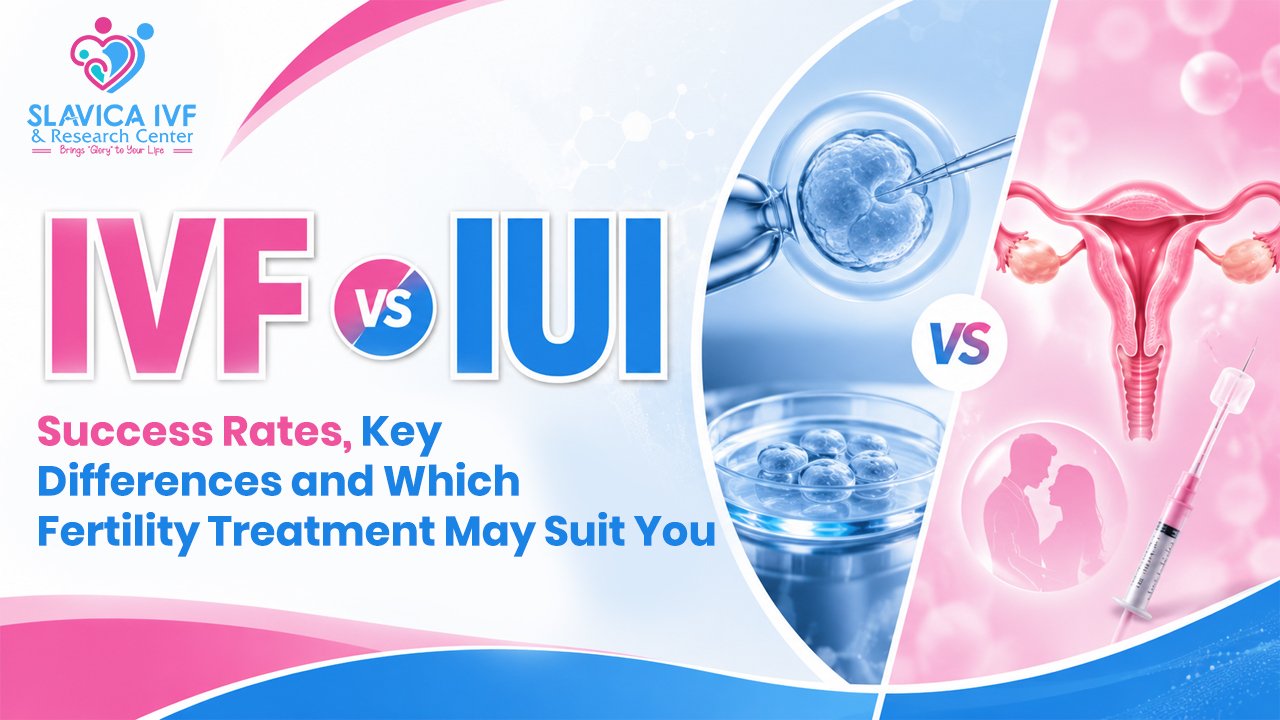
IVF vs IUI: Success Rates, Key Differences and Which Fertility Treatment May Suit You
Medical reviewer: Dr. Nikita Dhakal, MD (Obstetrics & Gynaecology), IVF Specialist
Last reviewed: July 2026
Choosing between IVF and IUI can feel overwhelming, especially when every month of trying carries emotional, physical and financial weight.
The main difference is simple: IUI places prepared sperm inside the uterus around ovulation, while IVF fertilises eggs with sperm in a laboratory and transfers an embryo into the uterus.
Direct answer: IVF is generally more effective per treatment cycle because more stages of fertilisation and embryo development can be observed. IUI is simpler, less invasive and may be appropriate when tubes are open, ovulation can be timed and sperm-related concerns are mild.
The right option depends on age, diagnosis, ovarian reserve, sperm parameters, tubal health, treatment history and personal priorities not one comparison chart alone.
This blog explains the success rate of IVF vs IUI, which treatment is physically more demanding, the chance of twins with IUI vs IVF, and how couples can make an informed decision with a fertility specialist.
Important: This article is for general education and does not replace individual medical advice. Fertility outcomes vary widely, even among people of the same age.
IVF vs IUI: What Is the Main Difference?
Both treatments aim to improve the chance of pregnancy, but they work at different stages of the reproductive process.
What Happens During IUI?
Intrauterine insemination, or IUI, is an office-based fertility procedure.
A semen sample is processed in the laboratory to concentrate motile sperm and remove seminal fluid. Around ovulation, the prepared sperm is placed into the uterus through a thin catheter.
Fertilisation still needs to happen naturally inside a fallopian tube. This means IUI generally requires at least one functioning tube, an egg that can ovulate and sperm that can reach and fertilise the egg.
IUI may be done in a natural cycle or alongside medicines that encourage or control ovulation. Timing, follicle monitoring and semen quality influence whether it is a reasonable first-line option.
Learn more about Slavica’s intrauterine insemination (IUI) service.
What Happens During IVF?
In vitro fertilisation, or IVF, involves ovarian stimulation, monitoring, egg retrieval, fertilisation in an embryology laboratory, embryo culture and embryo transfer.
Some embryos may be frozen for future use, depending on the treatment plan and clinical outcome.
Because fertilisation takes place in the laboratory, IVF can help when there are blocked tubes, more significant male-factor infertility, repeated IUI failures, reduced time because of age, certain endometriosis-related concerns or a need to consider embryo testing in selected cases.
For a fuller explanation of the stages, read Slavica’s IVF process step-by-step guide.
IVF vs IUI at a Glance
| Factor | IUI | IVF | Why It Matters |
|---|---|---|---|
| Where fertilisation happens | Inside the body, usually in a fallopian tube | In an embryology laboratory | IVF provides more information before embryo transfer |
| Main procedure | Prepared sperm placed in the uterus | Eggs collected, fertilised in a lab and embryos transferred | IVF involves more medication, monitoring and procedures |
| Need for open fallopian tubes | Usually yes, at least one | Not required for fertilisation | IVF may be considered in tubal-factor infertility |
| Male-factor infertility | May suit mild cases with adequate motile sperm | Often considered for severe sperm concerns or when ICSI is needed | Diagnosis matters more than the treatment label |
| Genetic testing | Not part of IUI | May be considered in selected IVF situations | Requires specialist counselling and individual indication |
| Physical burden | Usually lower | Higher because of injections and egg retrieval | Treatment comfort and recovery are personal considerations |
| Cost and planning | Usually less resource-intensive per attempt | Greater laboratory and medication involvement | Ask for a clear treatment plan before starting |
| Twins or multiples | Risk can rise if several follicles develop | Risk depends mainly on embryos transferred | Single embryo transfer can reduce multiple pregnancy risk |
| Per-cycle success | Usually lower and diagnosis-dependent | Usually higher, but never guaranteed | Use age- and diagnosis-specific counselling |
Which One Is Better, IUI or IVF?
Neither treatment is better for everyone.
The better option is the one that addresses the known barrier to pregnancy without adding unnecessary delay, cost or physical burden.
IUI is often considered when a person is younger, ovulation is present or can be managed, at least one fallopian tube is open and semen findings are normal or only mildly reduced.
It can also be relevant when donor sperm is being used.
IVF is commonly discussed sooner when both tubes are blocked, sperm quality is significantly impaired, there is a low expected chance with IUI, several monitored IUI cycles have not led to pregnancy, or time is especially important because fertility declines with age.
The decision should not be based only on someone else’s experience.
Two couples may both be told they have “unexplained infertility,” but their age, ovarian reserve, sperm results and duration of infertility may be very different. These details can change the recommended treatment pathway.
Success Rate of IVF vs IUI: How Should Couples Interpret the Numbers?
Success rates are meaningful only when the denominator is clear.
A clinic may report pregnancy per embryo transfer, pregnancy per started cycle, clinical pregnancy, ongoing pregnancy or live birth. These figures answer different questions.
For IUI, outcomes depend heavily on age, cause and duration of infertility, use of ovulation medicines, number of mature follicles, timing and sperm quality after preparation.
A single IUI attempt has a limited chance, so specialists may discuss a planned number of cycles before reassessment.
For IVF, outcomes vary by age, egg quality, embryo development, uterine factors, sperm factors, laboratory practice and whether own or donor eggs are used.
IVF is not a guaranteed shortcut, but it can offer a higher chance per attempt when the indication is appropriate.
International data should be viewed as a reference point, not a personal forecast or a Nepal-specific clinic rate.
The UK Human Fertilisation and Embryology Authority reported a 31% average pregnancy rate per fresh embryo transferred in 2023 and a 25% preliminary birth rate per fresh embryo transferred using patients’ own eggs. The same report showed a strong age effect: fresh-transfer birth rates were 35% for ages 18–34 and 5% for ages 43–44.
For IUI, age affects outcomes significantly. American Society for Reproductive Medicine patient guidance notes that stimulated IUI success is generally less than 5% per cycle after age 40, compared with around 10% per cycle at ages 35–40.
A Better Way to Discuss Fertility Success Rates
During a consultation, ask these questions:
- Is this success rate per cycle, per transfer, clinical pregnancy or live birth?
- What is the likely reason for infertility?
- How does age affect the expected result?
- How many IUI cycles would be reasonable before reassessment?
- Is there a reason to move directly to IVF?
- Does the treatment plan reduce avoidable risks, including multiple pregnancy?
For Nepal context, read Slavica’s guide to IVF success rates in Nepal and discuss what those broad ranges mean for your own fertility assessment.
Which Is More Painful: IUI or IVF?
For most people, IUI is physically less demanding than IVF.
The IUI procedure itself is brief and may feel similar to a routine pelvic examination. Some people experience mild cramping or discomfort, while others feel little or no discomfort.
IVF involves more steps.
Hormonal injections can cause temporary bloating, bruising, fatigue, mood changes or pelvic heaviness. Egg retrieval is a minor procedure and is commonly performed with anaesthesia or sedation according to the clinic protocol.
Embryo transfer is usually a short catheter procedure and is often less physically demanding than egg retrieval.
Pain is personal. Anxiety, previous pelvic procedures, endometriosis and the way the body responds to medication can all shape the experience.
A good fertility team should explain what to expect, discuss pain-relief or anaesthesia options and explain when symptoms require medical attention.
Chance of Twins: IUI vs IVF
Twins are not automatically a sign of a more successful fertility treatment.
Multiple pregnancy can carry higher medical risks for both the pregnant person and babies. For this reason, fertility care usually aims for a healthy singleton pregnancy whenever possible.
With IUI, twin risk is mainly linked to ovarian stimulation.
When medication causes more than one mature follicle, more than one egg may be released. Injectable gonadotropin stimulation may raise the risk further, which is why monitoring and cycle-cancellation decisions matter.
ASRM guidance reports that multiple-gestation rates in studies involving conventional-dose gonadotropin IUI ranged from 6.5% to 22%.
With IVF, the number of embryos transferred is a major driver of twin risk.
A single embryo transfer can substantially reduce the chance of twins while keeping the focus on a healthy pregnancy. In UK national data, the multiple-birth rate from IVF was 3.4% in 2023, reflecting increased use of single embryo transfer.
The comparison is not simply “IUI gives more twins” or “IVF gives more twins.”
The practical question is: how many follicles are developing in IUI, and how many embryos are planned for transfer in IVF?
When IUI May Be a Reasonable Starting Option
IUI may be discussed when the evaluation suggests:
- Unexplained infertility in a younger person with a reasonable prognosis
- Ovulation difficulties that can be treated or timed
- Mild male-factor infertility with an adequate post-wash sperm sample
- Cervical-factor concerns
- Use of donor sperm
- At least one open fallopian tube
- No major condition that makes natural fertilisation unlikely
Before IUI, clinicians may review ovulation, uterus and tubes, semen parameters and medical history.
A semen analysis is an important part of assessing the male partner because many sperm-related concerns do not cause obvious symptoms.
Slavica also explains common causes of low sperm count, helping couples understand why IUI may or may not be suitable.
When IVF May Offer a Clearer Path
IVF may be more appropriate when there is:
- Blockage or absence of both fallopian tubes
- Moderate to severe male-factor infertility or a need for ICSI
- Repeated unsuccessful IUI cycles
- Advanced reproductive age where delay may reduce the expected chance of pregnancy
- Endometriosis or pelvic factors that reduce the chance of natural fertilisation
- A need for embryo creation, freezing or medically indicated genetic testing
- Fertility preservation plans before treatments that could affect eggs or sperm
IVF is not necessarily the first option in every case.
It is a more complex route that should be recommended because it is clinically appropriate—not simply because it is more advanced.
IVF in Nepal: Choosing a Clinic Based on Care, Not Promises
Couples considering IVF in Nepal should expect a structured fertility assessment before a treatment recommendation.
A responsible IVF clinic in Kathmandu should review both partners where relevant, explain the likely cause of infertility, clarify the purpose of each test and discuss the benefits, limitations, costs and risks of IUI and IVF in understandable language.
Slavica IVF and Research Center lists fertility assessment, ovarian reserve testing, semen analysis, follicular monitoring, HSG/SSG, counselling and advanced fertility services alongside IUI and IVF.
A consultation with an IVF specialist in Kathmandu can help turn test results into an individual treatment plan rather than a generic package.
A reliable clinic should also be comfortable explaining when IUI remains reasonable, when IVF should be considered and when a cycle needs review instead of being repeated automatically.
A Practical Decision Framework for Couples
1. What Is the Likely Fertility Factor?
Ask whether the main concern is ovulation, tubal function, sperm quality, egg reserve, uterine health, age-related decline, endometriosis, unexplained infertility or more than one factor.
2. Is Time a Major Concern?
Age does not determine every outcome, but it changes the expected chance of pregnancy.
A treatment with a lower per-cycle probability may be acceptable for some people and less appropriate for others.
3. Are the Fallopian Tubes Open?
IUI relies on fertilisation happening naturally inside the body, so tubal status matters.
IVF bypasses the need for the tubes to bring egg and sperm together.
4. What Does the Semen Analysis Show?
A raw semen result alone is not the whole story.
The specialist may consider count, movement, shape and the number of motile sperm available after washing.
5. What Is the Plan After an Unsuccessful Cycle?
Before starting, agree on how success will be measured and when results will be reviewed.
This helps prevent couples from continuing a low-probability approach without a reasoned reassessment.
Frequently Asked Questions
Which one is better, IUI or IVF?
IVF is generally more effective per treatment attempt, but IUI may be a sensible first option for selected couples because it is simpler and less invasive.
IVF is often preferred for blocked tubes, significant male-factor infertility, repeated IUI failure, or when age and time make a higher-probability approach more appropriate.
Is IUI 100% successful?
No. IUI is never 100% successful.
Its chance of pregnancy depends on age, diagnosis, sperm quality, ovulation, tubal health, medication protocol and timing. Even when all factors look favourable, pregnancy cannot be guaranteed in a single cycle.
What is the best age for IUI?
There is no one “best” age, but IUI tends to have better results in younger patients, particularly before 35, when other fertility factors are favourable.
Success generally declines after 35 and more sharply after 40, so treatment decisions should be discussed promptly with a fertility specialist.
Why is IUI not very successful?
IUI can improve the number of motile sperm reaching the uterus, but it does not correct every cause of infertility.
Fertilisation, embryo development and implantation still need to occur naturally. Blocked tubes, severe sperm problems, poor egg quality, significant endometriosis and certain uterine factors can limit IUI success.
How successful is IUI on the first try?
First-cycle IUI success varies widely, so no single percentage applies to everyone.
The most useful estimate comes from a fertility specialist who can combine age, diagnosis, ovarian response, tubal status and post-wash sperm findings.
It is common to discuss IUI as a planned course with reassessment rather than judge the approach only by one cycle.
The Bottom Line
IVF and IUI are not competing products. They are different tools for different fertility situations.
IUI may be an appropriate lower-intensity step when natural fertilisation still has a reasonable chance.
IVF may offer a more direct path when fertilisation needs laboratory support, when IUI is unlikely to work or when time matters.
The most useful next step is a complete fertility evaluation followed by an honest discussion of success expectations, risks, costs and the point at which the plan should change.