- Sinamangal Kathmandu
Nepal -
Sun - Friday 8.00 - 18.00.
Saturday CLOSED

Tests Required Before IVF: A Complete Guide for Couples Planning IVF in Nepal
Tests Required Before IVF: A Complete Guide for Couples Planning IVF in Nepal
In vitro fertilization (IVF) is a medically advanced and carefully planned fertility treatment that helps individuals and couples conceive when natural pregnancy is not possible or has repeatedly failed. While many people focus on the IVF procedure itself, successful IVF begins long before embryo transfer, with detailed medical testing and evaluation.
For anyone considering treatment at an IVF center in Nepal, understanding the tests required before IVF is essential. These tests are not formalities; they form the medical foundation on which a safe, ethical, and effective IVF cycle is built.
This article explains why pre-IVF testing is necessary, what tests are commonly recommended for women and men, how results influence treatment decisions, and how a specialized IVF center such as Slavica I.V.F. and Research Center Pvt. Ltd approaches evaluation with evidence-based care.

Why Are Tests Required Before IVF?
IVF is not a one-size-fits-all treatment. Every patient has a unique reproductive history, hormonal profile, and medical background. Pre-IVF testing allows fertility specialists to:
- Identify the cause of infertility
- Assess ovarian reserve and sperm quality
- Detect hormonal or anatomical problems
- Reduce risks during treatment
- Customize IVF protocols
- Improve success rates
Pre-IVF testing helps doctors design a personalized treatment plan and reduces avoidable risks during IVF.
Skipping or rushing these evaluations can lead to failed cycles, emotional stress, and unnecessary cost.
IVF in Nepal: Why Structured Evaluation Matters
Across Nepal, awareness of infertility and assisted reproduction has grown significantly. However, IVF success depends not only on laboratory technology but also on clinical preparation.
International data shows:
- IVF success rates improve when treatment protocols are individualized
- Undiagnosed hormonal or uterine conditions reduce implantation rates
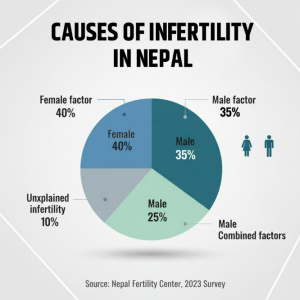
- Male factor infertility contributes to nearly 40–50% of infertility cases
A well established IVF center in Nepal follows global evaluation standards while adapting them to local health contexts.
Categories of Tests Before IVF
Pre-IVF tests are usually divided into:
- Female fertility evaluation
- Male fertility evaluation
- Infectious disease screening
- Genetic and general health tests
Each category plays a specific role in treatment planning.
Tests for Women Before IVF
1. Hormonal Blood Tests
Hormonal balance is critical for egg development and implantation.
Common hormone tests include:
- FSH (Follicle Stimulating Hormone)
- LH (Luteinizing Hormone)
- AMH (Anti-Müllerian Hormone)
- Estradiol (E2)
- Prolactin
- Thyroid hormones (TSH, T3, T4)
These tests help assess ovarian reserve, ovulation patterns, and endocrine health.
| Hormone Test | What It Indicates |
| AMH | Ovarian reserve |
| FSH | Ovarian response potential |
| TSH | Thyroid health |
| Prolactin | Ovulation interference |
2. Ultrasound and Antral Follicle Count (AFC)
A transvaginal ultrasound examines:
- Ovarian structure
- Uterine shape
- Endometrial thickness
Antral follicle count helps estimate how the ovaries may respond to stimulation during IVF.
3. Uterine and Tubal Evaluation
Even though IVF bypasses the fallopian tubes, uterine health remains essential.
Common tests include:
- Hysterosalpingography (HSG)
- Saline sonography
- Hysteroscopy (when indicated)
These tests detect fibroids, polyps, adhesions, or congenital uterine anomalies.
4. Ovarian Reserve Testing
Ovarian reserve testing helps determine:
- Stimulation dosage
- Expected egg yield
- IVF protocol type
This is particularly important for women over 35 or those with previous IVF failures.
5. General Health and Pre-Anesthesia Tests
Before IVF procedures:
- Blood count
- Blood sugar
- Liver and kidney function tests
- ECG (if required)
These ensure the patient can safely undergo ovarian stimulation and egg retrieval.
Tests for Men Before IVF
Male fertility evaluation is equally important.
1. Semen Analysis
This is the cornerstone of male fertility testing.
It assesses:
- Sperm count
- Motility
- Morphology
- Volume
Abnormal results guide decisions such as IVF vs. ICSI (intracytoplasmic sperm injection).
2. Advanced Sperm Tests (If Needed)
Depending on semen results:
- DNA fragmentation tests
- Hormonal evaluation
- Ultrasound of testes or prostate
Male factor infertility is often underdiagnosed without thorough testing.

Infectious Disease Screening Before IVF
Safety for both partners and future pregnancy is critical.
Common screenings include:
- HIV
- Hepatitis B and C
- Syphilis
- Rubella immunity
- TORCH infections (if indicated)
These tests protect maternal health and reduce pregnancy complications.
Genetic Testing Before IVF (Selected Cases)
Genetic screening may be recommended if:
- There is a family history of genetic disease
- Previous IVF failures occurred
- Recurrent miscarriages have happened
Testing helps prevent transmission of inherited conditions.
How Test Results Influence IVF Planning
Pre-IVF tests directly shape:
- Stimulation protocol
- Medication dosage
- Fertilization technique (IVF vs. ICSI)
- Embryo transfer timing
- Need for additional treatment before IVF
This personalization is a hallmark of quality care at a reputable IVF center.
IVF Success Rates and the Role of Testing
Global studies suggest:
- IVF success rates increase by 15-25% when protocols are customized
- Undiagnosed uterine issues reduce implantation rates significantly
- Male factor correction improves fertilization outcomes
Proper testing does not guarantee success but it maximizes the chance.
Why Choose a Structured IVF Center in Nepal?
A reliable IVF center in Nepal follows:
- International fertility guidelines
- Ethical medical standards
- Transparent communication
- Individualized patient care
Slavica I.V.F. and Research Center Pvt. Ltd emphasizes thorough evaluation before initiating IVF to ensure safe and effective treatment planning.
Common Myths About IVF Testing
Myth: Testing delays treatment
Reality: Testing prevents failed cycles and complications
Myth: Only women need evaluation
Reality: Male factor contributes to nearly half of infertility cases
Myth: All IVF centers follow the same testing protocol
Reality: Quality varies widely based on expertise and ethics
Emotional and Psychological Preparation
Pre-IVF counseling is often overlooked. Understanding test results:
- Reduces anxiety
- Improves treatment compliance
- Builds realistic expectations
Psychological readiness improves the IVF experience for couples.
Frequently Asked Questions (FAQs)
Are all tests mandatory before IVF?
Not all tests are mandatory for every patient; testing is individualized.
How long do IVF tests take?
Most evaluations are completed within one menstrual cycle.
Can IVF proceed without testing?
Proceeding without testing increases risk and reduces success rates.
Is male testing necessary for IVF?
Yes. Male fertility plays a significant role in IVF outcomes.
Is IVF available in Nepal?
Yes. Specialized IVF centers in Nepal provide advanced fertility care.
Conclusion
IVF is not just a laboratory procedure it is a carefully coordinated medical process that begins with thorough evaluation. Pre-IVF testing allows fertility specialists to understand each patient’s unique reproductive health and design a treatment plan that is safe, ethical, and effective.
For individuals and couples considering IVF in Nepal, choosing a center that prioritizes evidence-based testing is essential. A structured evaluation improves outcomes, reduces complications, and builds confidence throughout the fertility journey.
Medical & Content Review Note
This article is written for educational purposes and reflects international fertility guidelines and clinical best practices. It does not replace personalized medical consultation.