- Sinamangal Kathmandu
Nepal -
Sun - Friday 8.00 - 18.00.
Saturday CLOSED

Fertility Evaluation in Nepal: When Genetic Testing Is Recommended
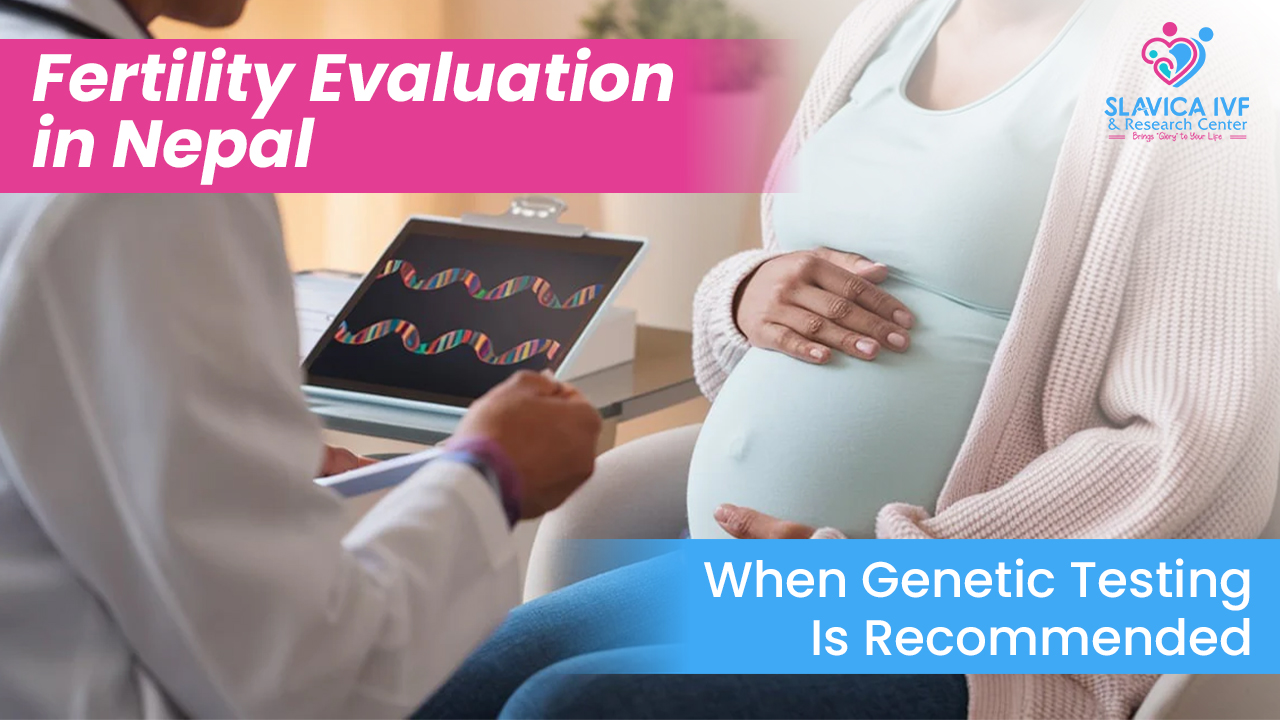
Fertility Evaluation in Nepal: When Genetic Testing Is Recommended
Fertility challenges affect many couples in Nepal, often silently and for longer than expected. While basic tests may appear normal, pregnancy may still not occur. In such situations, fertility evaluation needs to go beyond routine investigations.
This article explains when genetic testing is recommended during fertility evaluation in Nepal, using medically accepted guidelines and evidence-based practice.
The focus is informational and awareness-driven, especially for couples in Kathmandu and Lalitpur seeking clarity before or during infertility treatment.
What Is Fertility Evaluation?
Fertility evaluation is a structured medical process to identify causes that may delay or prevent pregnancy.
It usually includes:
- Medical and reproductive history
- Hormonal blood tests
- Ultrasound and imaging
- Semen analysis
- Tubal assessment (for women)
In many cases, these tests identify clear reasons.
However, 10–20% of couples are diagnosed with unexplained infertility, where results appear normal.
Why Some Fertility Problems Remain Undetected
Standard tests evaluate anatomy and hormones, but genetic factors operate at a deeper biological level.
Genetic issues may:
- Affect embryo development
- Cause repeated implantation failure
- Increase miscarriage risk
- Reduce IVF success rates
This is where genetic testing becomes relevant in infertility treatment in Nepal.
What Is Genetic Testing in Fertility Care?
Genetic testing analyzes DNA or chromosomes to detect inherited or acquired abnormalities that may impact reproduction.
It does not replace routine fertility tests.
It is used selectively, based on clinical indications.
When Is Genetic Testing Recommended?
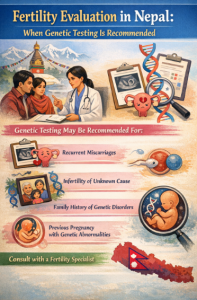
Genetic testing is usually advised during fertility evaluation in the following situations:
1. Recurrent Pregnancy Loss
- Two or more unexplained miscarriages
- Especially in early pregnancy
2. Unexplained Infertility
- Normal hormonal, imaging, and semen reports
- No pregnancy after 12–24 months
3. Repeated IVF Failure
- Poor embryo development
- Failure of implantation despite good-quality embryos
This is particularly relevant for couples considering IVF in Nepal.
4. Severe Male Factor Infertility
- Very low sperm count
- Absence of sperm (azoospermia)
- Abnormal sperm morphology
Genetic causes are more common than often assumed.
5. Family History of Genetic Disorders
- Known inherited conditions
- Congenital abnormalities in close relatives
Common Genetic Tests Used in Fertility Evaluation
| Test | Purpose | Who It’s For |
| Karyotyping | Detects chromosomal abnormalities | Both partners |
| Y-Chromosome Microdeletion | Identifies male infertility causes | Male partner |
| CFTR Gene Testing | Screens cystic fibrosis-related infertility | Selected cases |
| PGT (during IVF) | Screens embryos before transfer | IVF couples |
These tests are offered selectively at advanced centers such as Slavica IVF & Research Center, as part of structured fertility evaluation.
How Genetic Testing Supports IVF Decisions
For couples planning IVF in Nepal, genetic testing can:
- Improve embryo selection
- Reduce miscarriage risk
- Avoid repeated unsuccessful cycles
- Support informed clinical decisions
It does not guarantee pregnancy but improves decision quality and treatment planning.
Is Genetic Testing Necessary for Everyone?
No.
Genetic testing is not routine for all couples.
It is recommended only when clinical indicators exist.
Unnecessary testing can increase cost without improving outcomes.
Fertility Evaluation in Nepal: Current Context
In Nepal:
- Awareness about infertility is increasing
- Access to advanced diagnostics is improving
- More couples are seeking structured evaluation earlier
Choosing an IVF clinic in Nepal that follows evidence-based protocols is essential for appropriate testing decisions.
Emotional and Ethical Considerations
Genetic results can raise emotional concerns.
Good fertility care includes:
- Pre-test counseling
- Clear explanation of results
- Ethical handling of genetic information
Testing should always respect patient autonomy and confidentiality.
Key Takeaways
- Fertility evaluation goes beyond basic tests
- Genetic testing is recommended only in specific situations
- It plays a supportive role in infertility treatment in Nepal
- Especially useful before or during IVF when outcomes are unclear

Frequently Asked Questions (FAQ)
Is genetic testing mandatory before IVF?
No. It is recommended only when medical indicators suggest a benefit.
Can genetic problems be treated?
Some cannot be corrected, but treatment strategies can be adjusted accordingly.
Does genetic testing guarantee IVF success?
No. It improves understanding, not certainty.
Is genetic testing available in Nepal?
Yes, at selected fertility centers with advanced diagnostic support.
Should both partners be tested?
Often yes, depending on the clinical scenario.
Medical Review Note
This article is based on internationally accepted fertility guidelines and current reproductive medicine practices. It is intended for educational purposes only and does not replace personalized medical consultation with a qualified fertility specialist.